




China's EV Revolution Could Reshape Global Markets as BYD Predicts 80% Electric Vehicle Penetration
China's EV Revolution Could Reshape Global Markets as BYD Predicts 80% Electric Vehicle Penetration
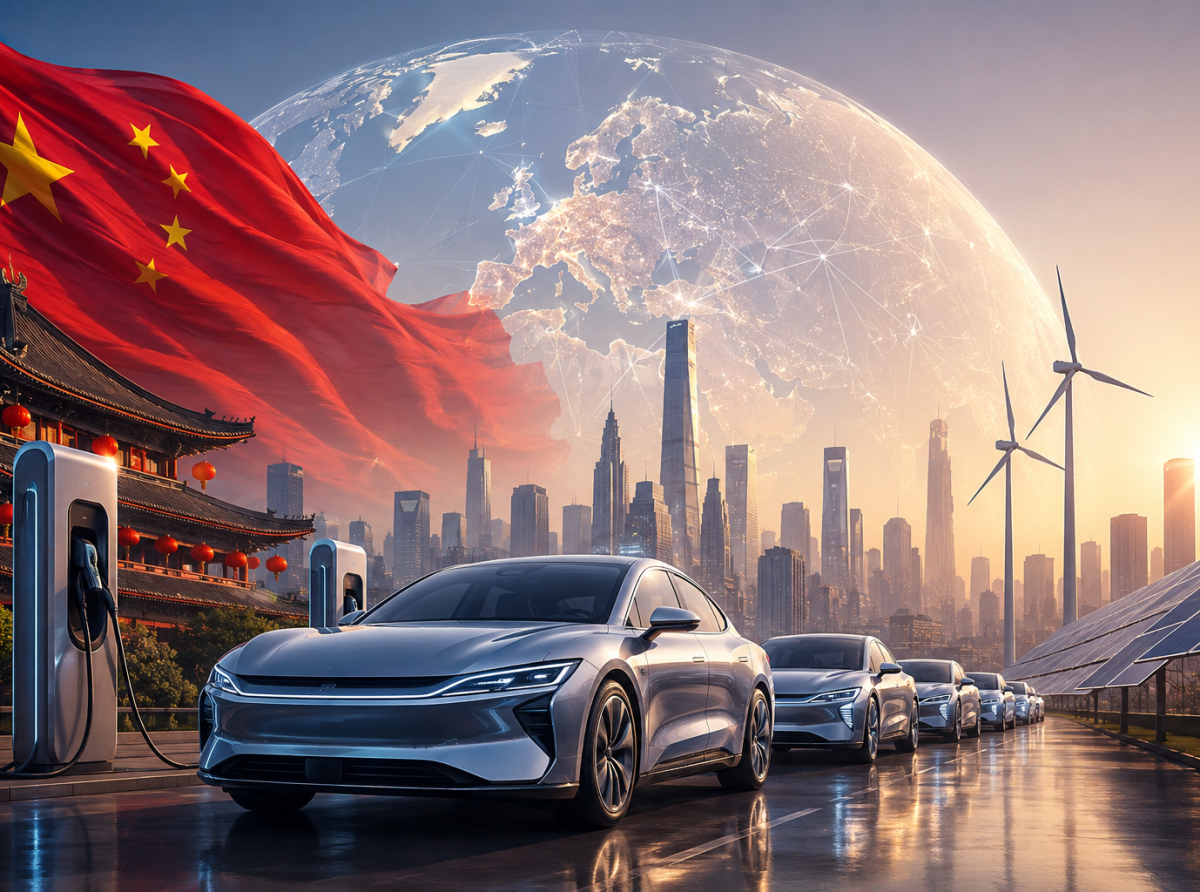
China's electric vehicle market may be approaching a historic turning point. According to BYD Executive Vice President Stella Li, electric and hybrid vehicles could soon account for nearly 80% of all new car sales in China. If that forecast proves accurate, the world's largest automotive market could become the first major economy where internal combustion engines move from dominance to minority status. The implications extend far beyond the automotive sector, potentially affecting oil demand, commodity markets, technology stocks, global manufacturing, and long-term investment strategies.
China Is Moving Faster Than the Rest of the World
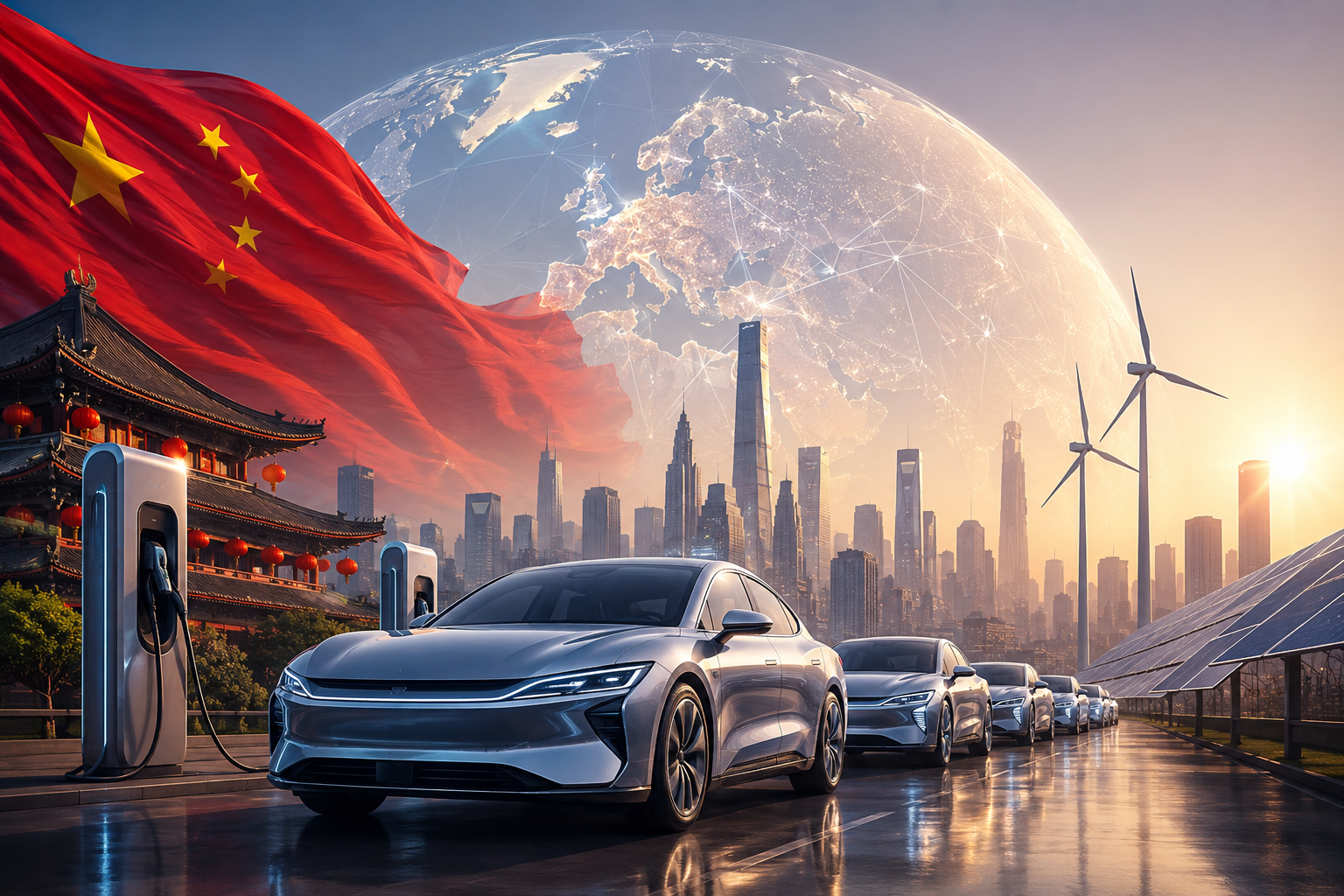
China's transition toward electric mobility has accelerated at a pace few analysts predicted several years ago. According to industry data, new energy vehicles already represented more than half of new passenger vehicle sales in 2024, while the penetration rate reached nearly 63% in recent months.This contrasts sharply with other major markets. Electric vehicle adoption remains around 10% in the United States and approximately 25% globally, according to industry estimates.
Government incentives, expanding charging infrastructure, aggressive competition among manufacturers, and rapid battery innovation have created conditions that are difficult to replicate elsewhere. Chinese consumers now have access to hundreds of EV models across nearly every price segment, creating intense competition and accelerating adoption.
The result is a market that increasingly resembles the smartphone industry during its rapid growth phase, where technological improvement and falling costs reinforce each other.
China's EV Revolution Could Reshape Global Markets as BYD Predicts 80% Electric Vehicle Penetration
Why Investors Are Paying Attention to BYD's Forecast
BYD is no longer simply an automaker. It has become one of the most influential companies in the global EV ecosystem.The company's forecast matters because it reflects broader industry trends rather than the ambitions of a single manufacturer. If EV penetration approaches 80%, China could reach a point where gasoline-powered vehicles become a niche category rather than the industry standard.
Such a transition would create winners and losers across multiple sectors.
Battery manufacturers could benefit from sustained demand growth. Semiconductor suppliers focused on automotive applications may see expanding opportunities. Charging infrastructure providers could experience increased investment. At the same time, traditional suppliers dependent on combustion-engine components may face long-term structural pressure.
Markets are increasingly treating the EV transition not as an automotive story but as an industrial transformation affecting dozens of industries simultaneously.
What It Could Mean for Oil Markets
One of the most significant consequences may emerge in the energy sector.China remains one of the world's largest oil consumers. A rapid increase in electric vehicle adoption could gradually reduce long-term growth in gasoline demand.
The timing is particularly notable. Higher oil prices linked to geopolitical tensions in the Middle East have already contributed to declining sales of conventional vehicles in China. Industry data show gasoline-powered car sales fell sharply as consumers increasingly favored electric and hybrid alternatives.
While EV adoption will not eliminate oil demand overnight, the long-term trend is becoming increasingly difficult to ignore.
For energy markets, this creates a new strategic challenge. Future oil demand forecasts may need to account not only for economic growth but also for the speed at which large economies electrify transportation.
Over the next decade, widespread EV adoption could place structural pressure on global fuel consumption growth, potentially influencing long-term pricing dynamics across energy markets.
The Next Battleground: Autonomous Driving and AI
The first phase of competition focused on batteries, range, and pricing. The next phase may revolve around artificial intelligence.BYD expects future competition to increasingly center on driver-assistance and autonomous technologies. The company has already expanded insurance programs related to advanced driver-assistance systems and introduced its own AI-focused automotive chips.
This shift could have major implications for technology markets.
Automakers are becoming software companies. Vehicles increasingly rely on semiconductors, AI algorithms, sensors, and cloud connectivity. As a result, companies operating in artificial intelligence, semiconductor manufacturing, and autonomous mobility may capture a larger share of future automotive value creation.
The transformation mirrors what occurred in the smartphone industry, where software ecosystems eventually became as important as hardware itself.
Why Global Automakers Should Be Concerned
The forecast also highlights growing pressure on international manufacturers.Chinese EV companies have moved beyond competing primarily on price. They are increasingly competing on charging speed, battery technology, software integration, and manufacturing efficiency.
BYD recently reported demand that exceeds its current delivery capacity, supported in part by ultra-fast charging technology capable of significantly reducing charging times. As domestic competition intensifies, Chinese manufacturers are expanding into overseas markets. Europe has become a key target despite regulatory scrutiny and geopolitical tensions.
Industry analysts increasingly believe the next major challenge for established automakers will not come from traditional rivals but from rapidly expanding Chinese EV producers seeking global market share.
What This Means for Financial Markets
For investors, the broader significance extends beyond vehicle sales.An 80% EV penetration rate in China would reinforce several long-term investment themes. Battery supply chains, industrial automation, renewable energy infrastructure, semiconductor manufacturing, AI-driven mobility systems, and critical minerals could all benefit from continued electrification.
At the same time, sectors tied heavily to traditional automotive technologies may face growing disruption.
Perhaps most importantly, China's EV transformation could accelerate similar transitions elsewhere. As production volumes increase and costs continue to decline, electric vehicles may become more competitive globally, placing additional pressure on manufacturers that are slow to adapt.
BYD's prediction that electric vehicles could account for 80% of China's car sales represents more than an industry forecast. It signals a potential restructuring of global transportation, energy consumption, and industrial supply chains.
If China reaches that milestone, the impact will extend far beyond the country's borders. Oil markets, technology companies, automakers, commodity producers, and investors may all need to adapt to a future in which electric mobility is no longer an emerging trend but the dominant force shaping the automotive industry.
If China reaches that milestone, the impact will extend far beyond the country's borders. Oil markets, technology companies, automakers, commodity producers, and investors may all need to adapt to a future in which electric mobility is no longer an emerging trend but the dominant force shaping the automotive industry.
By Claire Whitmore
June 09, 2026
Join us. Our Telegram: @forexturnkey
All to the point, no ads. A channel that doesn't tire you out, but pumps you up.
June 09, 2026
Join us. Our Telegram: @forexturnkey
All to the point, no ads. A channel that doesn't tire you out, but pumps you up.





Report
My comments