Sterling yield curves: a spot rate and a forward rate answer different questions
The Bank of England publishes estimated gilt and OIS curves. Their instrument basis, maturity and publication lag matter when linking rates to the pound.
Full analysis is selected. Choose Quick brief to scan the key points first.
WFN QUICK BRIEF · UNDER 1 MIN
The short version
MODE 2 OF 2
What the primary record establishes
The Bank of England estimates daily UK government-bond curves and sterling overnight-index-swap curves. The government set includes nominal and real rates; the OIS set is nominal. The Bank aims to publish daily curves by noon on the following business day. Bank of England — Yield curves ↗
What the distinction changes
A spot rate for a horizon summarises discounting from today to that horizon. A forward rate concerns a future interval. Comparing one with the other without naming the construction can turn a change of measurement into a supposed policy surprise.
What to check before drawing a conclusion
Align the observation date with the currency move. A curve published the next business day should not be described as a fresh quote from the moment a headline appeared. Retain the downloaded vintage because the Bank says estimated data can be revised.
Quick Brief is a reading aid. The full article and source trail stay on this page.
WFN STORY COMPASS
Choose your reading angle
Move between the reported record, market context and open questions. Status labels keep claims distinct from findings.
All context layers are visible. Choose a lens to jump to that part of the story.
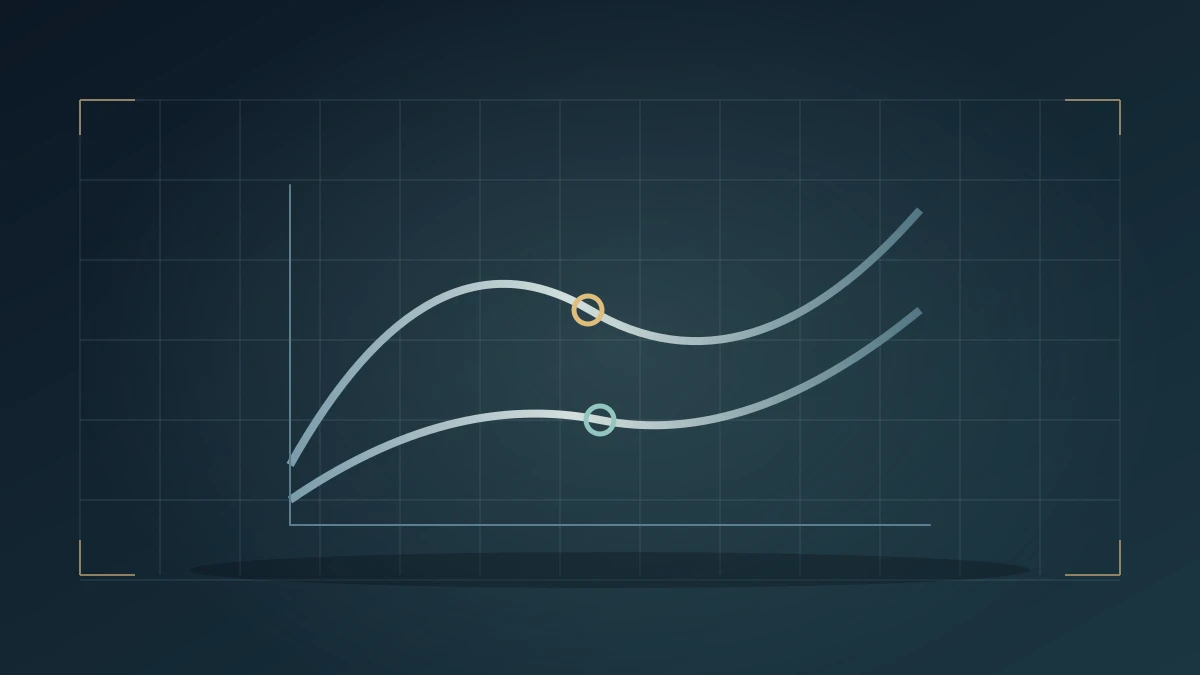
Original WFN vector illustrationWFN · 18 October 2026
Editorial noteSource-based explanation with original WFN analysis. Historical records retain their dates; numerical examples are illustrative. The original vector illustration is conceptual and is not documentary evidence.
WFN REALITY LEDGER
What is on the record?
Primary-source explainer
Primary-source explainer
Primary record / reference periodBank of England curve methodology checked 18 October 2026
The linked source supports the documented record; WFN interpretation and illustrative examples are separate.
The Bank of England publishes estimated gilt and OIS curves. Their instrument basis, maturity and publication lag matter when linking rates to the pound.
01 · VERIFIED RECORD
What the primary record establishes
The Bank of England estimates daily UK government-bond curves and sterling overnight-index-swap curves. The government set includes nominal and real rates; the OIS set is nominal. The Bank aims to publish daily curves by noon on the following business day. Bank of England — Yield curves ↗
Its terminology guide distinguishes spot rates from instantaneous forward rates. The published curves are estimates fitted from market instruments, rather than a list of future policy decisions already agreed by the Monetary Policy Committee. Bank of England — Yield curve terminology ↗
02 · WFN EDITORIAL ANALYSIS
What the distinction changes
A spot rate for a horizon summarises discounting from today to that horizon. A forward rate concerns a future interval. Comparing one with the other without naming the construction can turn a change of measurement into a supposed policy surprise.
For a sterling briefing, specify whether the comparison uses gilts or OIS, nominal or real rates, and matching maturities. A fitted curve can support an account of market pricing, but the explanation still needs evidence about what changed and when.
03 · REVIEW POINTS
What to check before drawing a conclusion
Align the observation date with the currency move. A curve published the next business day should not be described as a fresh quote from the moment a headline appeared. Retain the downloaded vintage because the Bank says estimated data can be revised.
A forward path is a useful scenario input, not a guarantee of realised overnight rates. WFN recommends treating curve construction, economic interpretation and trading execution as distinct questions, with an explicit source and timestamp attached to each comparison.