ERC-2771: paying for gas and authorising an action are separate roles
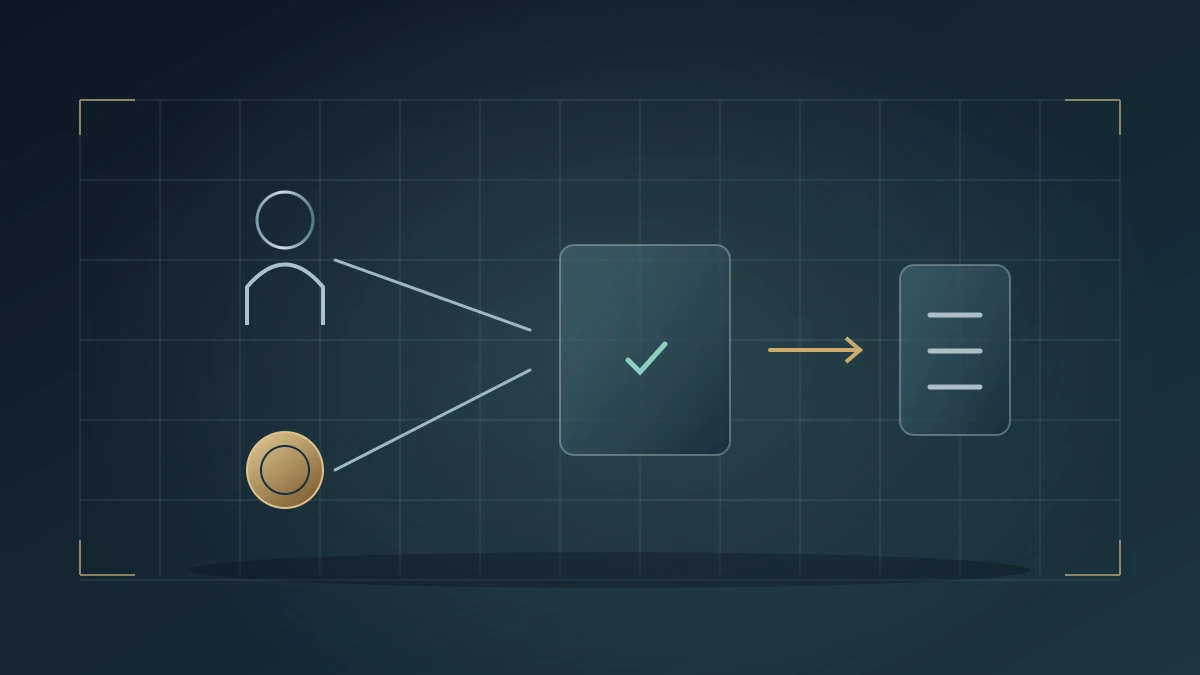
Meta-transactions distinguish the signer, gas relay, trusted forwarder and receiving application. A sponsored interaction still needs the correct authorisation context.
Full analysis selected. Choose Quick brief to read the key points first.
WFN QUICK BRIEF · UNDER 1 MIN
The short version
MODE 2 OF 2
What the primary record establishes
ERC-2771, created on 1 July 2020 and published as Final, lets recipient contracts accept signed requests through a trusted forwarder. The gas relay pays the transaction’s gas. Ethereum — ERC-2771, Final; created 1 July 2020 ↗
What the distinction changes
WFN interpretation: a sponsored interface can remove the need for the user to supply the network fee directly, while leaving the underlying fee and signed authorisation as separate parts of the operation.
What to check before drawing a conclusion
Check the actual forwarder trusted by the deployed recipient and the request the user signs. A service label such as gasless does not describe the full permission being granted.
Quick Brief is a reading aid. The full article and source trail stay on this page.
WFN STORY COMPASS
Choose your reading angle
Switch between the reported record, market context and open questions. Status labels distinguish claims from findings.
All context layers are visible. Choose a lens to jump to that part of the story.
Original WFN vector illustrationWFN · 2 November 2026
Editorial noteSource-based explanation with original WFN analysis. Historical records retain their dates; numerical examples are illustrative. The original vector illustration is conceptual and is not documentary evidence.
WFN REALITY LEDGER
What is on the record?
Primary-source explainer
Primary-source explainer
Primary record / reference periodHistorical specification; Final; created 1 July 2020
The linked source supports the documented record; WFN interpretation and illustrative examples are separate.
Meta-transactions distinguish the signer, gas relay, trusted forwarder and receiving application. A sponsored interaction still needs the correct authorisation context.
01 · VERIFIED RECORD
What the primary record establishes
ERC-2771, created on 1 July 2020 and published as Final, lets recipient contracts accept signed requests through a trusted forwarder. The gas relay pays the transaction’s gas. Ethereum — ERC-2771, Final; created 1 July 2020 ↗
The forwarder appends the signer’s address to calldata. The recipient must check that the caller is a forwarder it trusts before interpreting that suffix as the signer. Ethereum — ERC-2771, Final; created 1 July 2020 ↗
02 · WFN EDITORIAL ANALYSIS
What the distinction changes
WFN interpretation: a sponsored interface can remove the need for the user to supply the network fee directly, while leaving the underlying fee and signed authorisation as separate parts of the operation.
For an application log, identify both the immediate caller and the effective signer. If an audit report uses the forwarder address as though it were every customer, the records can merge distinct users into one apparent actor.
03 · REVIEW POINTS
What to check before drawing a conclusion
Check the actual forwarder trusted by the deployed recipient and the request the user signs. A service label such as gasless does not describe the full permission being granted.
A useful review traces the message from signing through forwarding to the application’s action. Interface support establishes a mechanism; it does not by itself prove that a particular deployment verifies every request correctly.