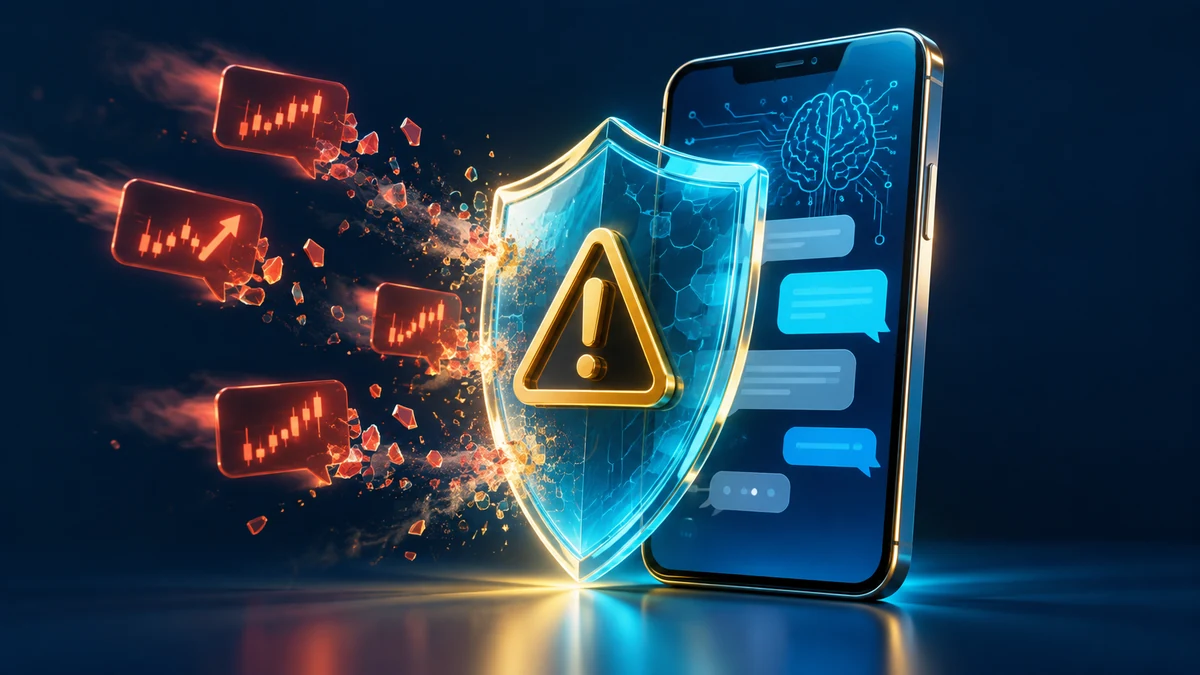
The SEC announced two fraud complaints on September 29 concerning alleged online investment schemes involving Cryptoaiml and TSAI entities. The release describes more than $12.5 million and $2.8 million in investor funds, respectively. SEC: Cryptoaiml and TSAI fraud complaints
Follow the evidence
Trace how the event could reach markets, then inspect a competing explanation.
Compare explanations
Switch lenses to see what each account explains—and what remains uncertain.
The SEC's investor alert describes a common sequence: a group promotes an investment or algorithm, directs users to an app or website, shows purported profits and then demands further payment to release funds. It also warns that scammers can impersonate genuine professionals. The alert is general fraud guidance; it does not constitute a finding against every messaging group or automated trading service. Investor.gov: group-chat investment scam alert WFN analysis: the verification failure occurs when relationship-building substitutes for checking the receiving legal entity and the location of funds. Screenshots of returns, endorsements by other group members and an attractive app interface do not independently establish that trades occurred. Each item may be controlled by the same party seeking the deposit. For legitimate brokers, the issue also concerns impersonation. Customers need a reliable way to distinguish an official relationship from an unrelated group borrowing the firm's name. Confirming a conversation through contact information obtained independently is more useful than relying on a link or certificate supplied by the promoter.
The SEC's investor alert describes a common sequence: a group promotes an investment or algorithm, directs users to an app or website, shows purported profits and then demands further payment to release funds. It also warns that scammers can impersonate genuine professionals. The alert is general fraud guidance; it does not constitute a finding against every messaging group or automated trading service. Investor.gov: group-chat investment scam alert WFN analysis: the verification failure occurs when relationship-building substitutes for checking the receiving legal entity and the location of funds. Screenshots of returns, endorsements by other group members and an attractive app interface do not independently establish that trades occurred. Each item may be controlled by the same party seeking the deposit. For legitimate brokers, the issue also concerns impersonation. Customers need a reliable way to distinguish an official relationship from an unrelated group borrowing the firm's name. Confirming a conversation through contact information obtained independently is more useful than relying on a link or certificate supplied by the promoter.
The September 29 release reports filed civil complaints. Its factual accusations should remain attributed to the SEC; the announcement does not establish final court judgments or a guaranteed return of investor funds. SEC: Cryptoaiml and TSAI fraud complaints Investor.gov recommends independently checking investment professionals and using genuine firm records to confirm contact details. Someone pointing to a Form D as proof of an SEC licence is making a claim the agency specifically warns against. Investor.gov: false registration claims and Form D The next reporting milestones are court orders, judgments or officially announced recoveries. For a suspected scam, preserve the communications and payment records before making additional transfers. A demand for a new fee to unlock displayed profits deserves scrutiny; it should not be treated as proof that those profits or a legitimate account exist.
The trading and regulatory claims are allegations in filed complaints
The agency alleges that Cryptoaiml used WhatsApp groups, impersonated investment professionals and promoted supposed AI trading signals. Investors were allegedly directed to a fake platform displaying invented profits. In the separate TSAI case, the SEC alleges that an advertised AI bot programme did not exist and deposited money was not used to earn investment returns. SEC: Cryptoaiml and TSAI fraud complaints
Both accounts include alleged false regulatory credentials. Investor.gov separately explains that a Form D is not evidence of SEC registration, licensure or approval. Finding such a filing therefore cannot validate a claim that an adviser, broker or platform has the regulatory permission it advertises. The identity and actual registration must be checked independently. Investor.gov: false registration claims and Form D
Trust built inside a chat can bypass ordinary verification
The SEC's investor alert describes a common sequence: a group promotes an investment or algorithm, directs users to an app or website, shows purported profits and then demands further payment to release funds. It also warns that scammers can impersonate genuine professionals. The alert is general fraud guidance; it does not constitute a finding against every messaging group or automated trading service. Investor.gov: group-chat investment scam alert
WFN analysis: the verification failure occurs when relationship-building substitutes for checking the receiving legal entity and the location of funds. Screenshots of returns, endorsements by other group members and an attractive app interface do not independently establish that trades occurred. Each item may be controlled by the same party seeking the deposit.
For legitimate brokers, the issue also concerns impersonation. Customers need a reliable way to distinguish an official relationship from an unrelated group borrowing the firm's name. Confirming a conversation through contact information obtained independently is more useful than relying on a link or certificate supplied by the promoter.
A complaint is not a final judgment or a recovery announcement
The September 29 release reports filed civil complaints. Its factual accusations should remain attributed to the SEC; the announcement does not establish final court judgments or a guaranteed return of investor funds. SEC: Cryptoaiml and TSAI fraud complaints
Investor.gov recommends independently checking investment professionals and using genuine firm records to confirm contact details. Someone pointing to a Form D as proof of an SEC licence is making a claim the agency specifically warns against. Investor.gov: false registration claims and Form D
The next reporting milestones are court orders, judgments or officially announced recoveries. For a suspected scam, preserve the communications and payment records before making additional transfers. A demand for a new fee to unlock displayed profits deserves scrutiny; it should not be treated as proof that those profits or a legitimate account exist.