




Alberta Separation Vote Signals a Growing Global Trend Toward Resource Nationalism
Alberta Separation Vote Signals a Growing Global Trend Toward Resource Nationalism
The planned sovereignty vote in Alberta is unlikely to immediately break Canada apart, but it reveals a broader trend emerging across developed economies: resource-rich regions are becoming increasingly resistant to centralized political and fiscal control. In 2026, the debate around Alberta is no longer just about Canadian federalism — it reflects deeper tensions between energy-producing territories and national governments pursuing different economic, environmental and geopolitical priorities.
Alberta pushes the question into the mainstream
Alberta is preparing for a non-binding public vote on whether the province should remain part of Canada or begin the legal path toward a formal separation referendum.The initiative follows months of campaigning by separatist groups arguing that Ottawa systematically ignores Alberta’s economic interests despite the province’s critical contribution to national revenues.
Premier Danielle Smith stated that the issue can no longer be politically suppressed and that public sentiment must be measured directly.
Even though Smith herself supports remaining within Canada, the decision to place the issue before voters changes the political landscape.
This is the first time in modern Canadian history that a province outside Quebec has pushed separation into mainstream institutional debate.
Oil remains the center of the conflict
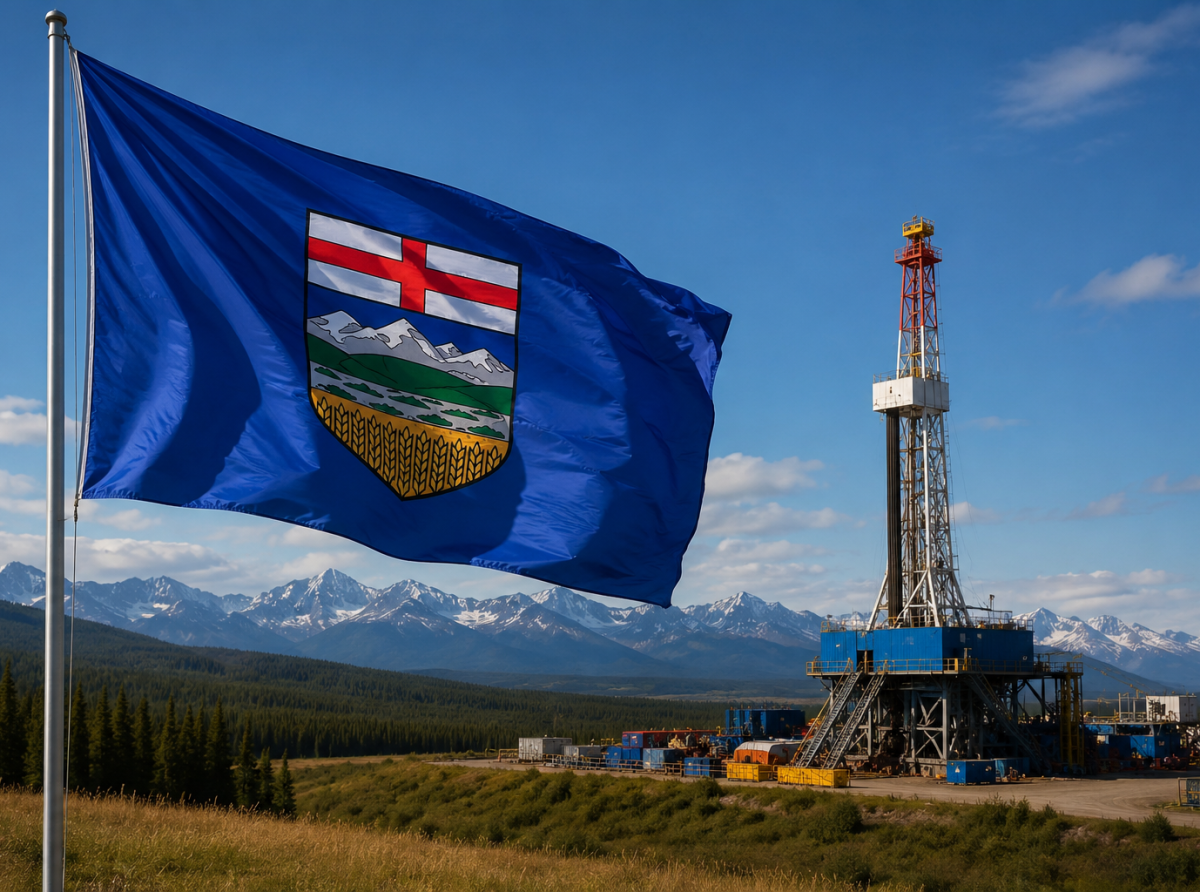
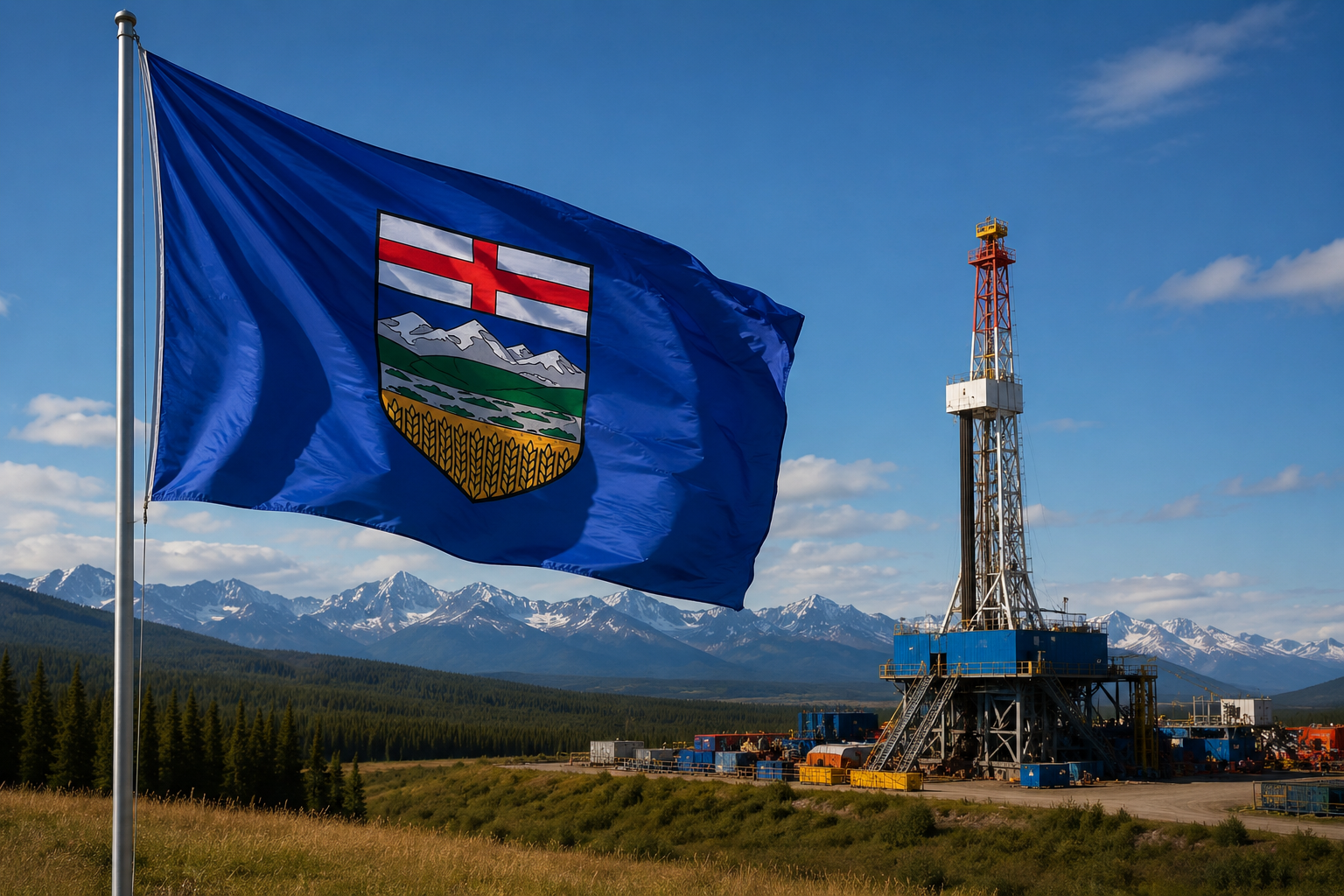
The economic background is impossible to separate from the political tension.Alberta holds one of the world’s largest proven oil reserves through its massive oil sands industry. With approximately 159 billion barrels of recoverable reserves, the province ranks behind only Venezuela, Saudi Arabia and Iran.
This creates a structural contradiction inside Canada.
Alberta’s economy remains deeply tied to hydrocarbons, while federal political priorities increasingly focus on climate policy, energy transition and environmental regulation.
Many residents perceive this imbalance as a transfer of wealth and influence away from the province while expecting Alberta to continue financing broader national programs.
Analytically, this resembles a growing pattern visible in multiple Western economies: regions generating strategic commodities increasingly question centralized redistribution systems.
Alberta Separation Vote Signals a Growing Global Trend Toward Resource Nationalism
Why the vote matters even if separation fails
Current polling suggests that full separation still lacks majority support.Petitions supporting Canadian unity reportedly gathered more signatures than separatist campaigns, indicating that most residents still prefer remaining within the federation.
However, the political significance lies elsewhere.
The referendum normalizes sovereignty discourse inside a stable G7 democracy traditionally viewed as politically cohesive.
That matters because once separatist narratives become institutionalized, they rarely disappear completely even after electoral defeat.
Instead, they often evolve into long-term bargaining leverage against central governments.
The vote therefore functions less as an immediate independence movement and more as a pressure mechanism aimed at extracting greater autonomy, regulatory flexibility and economic influence.
The broader global trend: fragmentation inside developed economies
The Alberta case reflects a wider geopolitical shift.Across developed economies, regional identities are becoming increasingly tied to economic specialization and resource ownership.
Energy-producing regions, industrial zones and high-productivity territories are questioning whether centralized systems distribute economic gains fairly.
This trend has appeared in different forms across Europe and North America, particularly in regions where local economic priorities diverge sharply from national political agendas.
The combination of inflation, energy transition policies and rising fiscal pressure accelerates these tensions.
Analytical conclusion: economic decentralization pressures are becoming politically visible.
Energy transition may intensify regional conflicts
Ironically, the global push toward decarbonization may strengthen rather than weaken these dynamics in the short term.Hydrocarbon-producing regions often perceive climate policy as an existential economic threat rather than a neutral environmental strategy.
As a result, energy transition debates increasingly overlap with identity politics, sovereignty arguments and regional populism.
Alberta’s frustration reflects this collision directly.
The province sees itself as economically essential while simultaneously feeling politically constrained by federal policy directions shaped elsewhere.
This creates a perception gap that is difficult to solve purely through economic negotiation.
Why investors should pay attention
For markets, the Alberta situation matters beyond domestic Canadian politics.Resource-rich regions worldwide are becoming more politically assertive at a time when energy security has returned as a major strategic priority.
Any increase in internal instability around key commodity-producing territories raises questions about regulation, taxation, infrastructure investment and export policy.
Even without formal separation, prolonged political friction could affect energy projects, investor confidence and long-term policy predictability in Canada’s oil sector.
The symbolic impact may be even larger than the practical one.
The Alberta referendum debate is unlikely to immediately dismantle Canada. But it signals something broader: advanced economies are entering a period where economic geography increasingly shapes political identity. Resource-producing regions are becoming less willing to accept centralized policy decisions that they perceive as economically harmful. In that sense, Alberta may represent not an isolated separatist movement, but an early indicator of a wider fragmentation trend emerging across the developed world.
By Jake Sullivan
May 22, 2026
Join us. Our Telegram: @forexturnkey
All to the point, no ads. A channel that doesn't tire you out, but pumps you up.
May 22, 2026
Join us. Our Telegram: @forexturnkey
All to the point, no ads. A channel that doesn't tire you out, but pumps you up.





Report
My comments