



How Data Brokers Turn Smartphones Into Battlefield Tracking Devices
How Data Brokers Turn Smartphones Into Battlefield Tracking Devices
The geolocation controversy demonstrates how commercial data ecosystems have evolved into powerful intelligence networks. What began as a tool for targeted advertising now creates potential national security vulnerabilities. Governments, regulators, and defense agencies increasingly recognize that controlling access to location data may become as important as protecting traditional classified information in the digital age.
Timeline of Problems
2016 — First Known Use
The Wall Street Journal reported that a US defense unit was able to track the movements of soldiers from base to staging point using commercial geolocation data.
2018 — Strava scandal
A Global Heat Map based on fitness tracker data (Fitbit, Strava) was released
In desert regions (Iraq, Syria), the map was dark, except for small spots of activity—these are secret US bases.
The Pentagon itself promoted Fitbit to combat obesity, the military operations they actively used in Afghanistan, and freedom of choice.
May 2026 — Official CENTCOM Confirmation
U.S. Central Command (CENTCOM) has accepted responsibility for addressing threats from adversaries' use of commercial geolocation data in a written statement to Senator Ron Wyden.
Surveillance during Operation Epic Fury in the Strait of Hormuz has been confirmed.
2016 — First Known Use
The Wall Street Journal reported that a US defense unit was able to track the movements of soldiers from base to staging point using commercial geolocation data.
2018 — Strava scandal
A Global Heat Map based on fitness tracker data (Fitbit, Strava) was released
In desert regions (Iraq, Syria), the map was dark, except for small spots of activity—these are secret US bases.
The Pentagon itself promoted Fitbit to combat obesity, the military operations they actively used in Afghanistan, and freedom of choice.
May 2026 — Official CENTCOM Confirmation
U.S. Central Command (CENTCOM) has accepted responsibility for addressing threats from adversaries' use of commercial geolocation data in a written statement to Senator Ron Wyden.
Surveillance during Operation Epic Fury in the Strait of Hormuz has been confirmed.

How Data Brokers Turn Smartphones Into Battlefield Tracking Devices
How Data Brokers Turn Smartphones Into Battlefield Tracking Devices
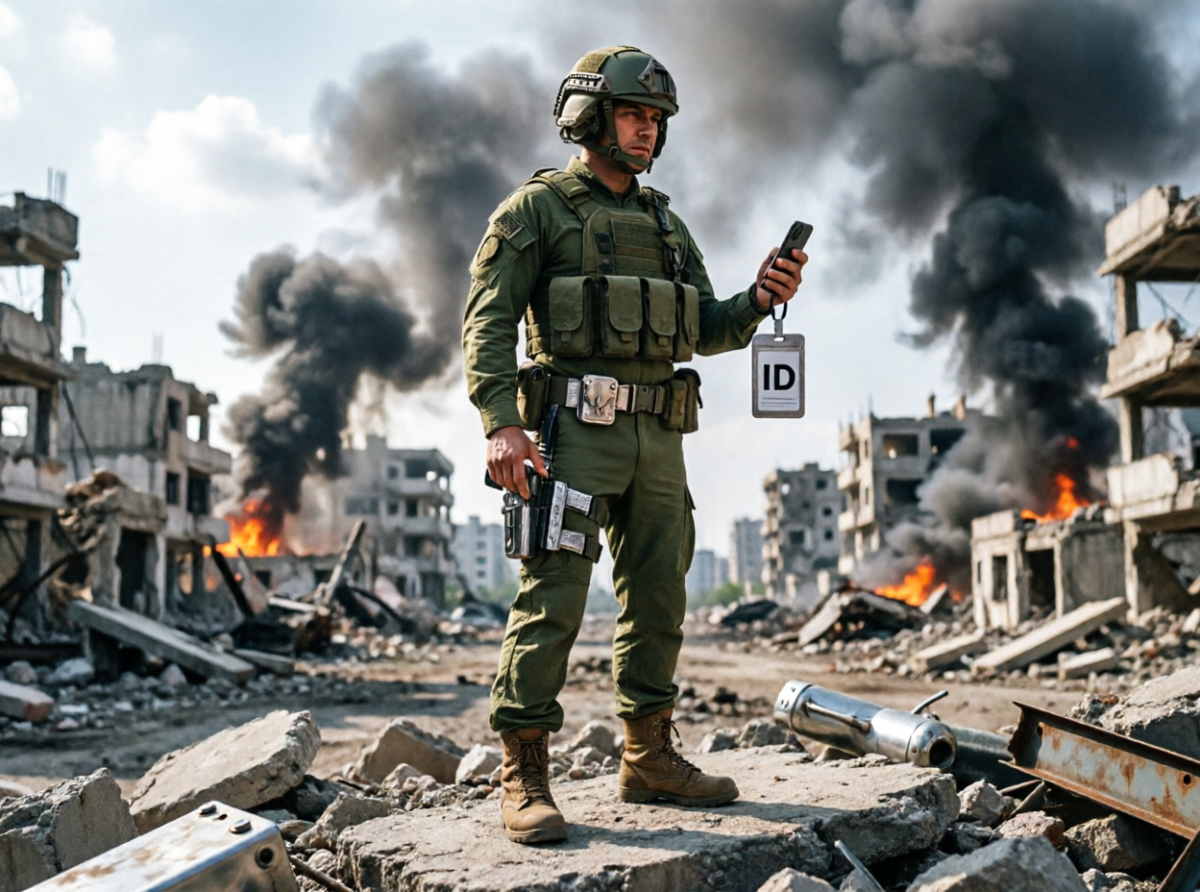
For years, digital privacy debates focused primarily on advertising, targeted marketing, and consumer rights. Today, the stakes are much higher.According to U.S. lawmakers and military officials, commercially available geolocation data has evolved into a national security vulnerability that can expose troop movements, military facilities, operational patterns, and even individual service members to hostile actors.
What makes the situation particularly alarming is that no hacking is required.
No cyberattack. No espionage operation. No classified breach.
The information can be purchased legally through the global data brokerage ecosystem.
Recent disclosures from U.S. Central Command (CENTCOM) suggest that adversaries have already used commercially available location data to monitor American military personnel and potentially support military operations against them.
The issue raises fundamental questions about privacy, warfare, and the unintended consequences of the modern digital advertising industry.
Every day, billions of smartphones generate location information.
Applications, advertising networks, analytics platforms, and third-party services continuously collect coordinates to improve services, personalize content, and deliver targeted advertisements.
What begins as ordinary commercial data collection can eventually become intelligence. The process typically follows four stages.
First, smartphones and applications collect location information through GPS services, Wi-Fi networks, Bluetooth signals, and advertising frameworks.
Second, data brokers aggregate this information, linking advertising identifiers to specific devices and building detailed movement profiles.
Third, the information is resold through complex networks of intermediaries, often reaching entities far removed from the original collector.
Finally, hostile actors can analyze these datasets to identify military facilities, troop concentrations, patrol routes, logistical hubs, and recurring behavioral patterns.
The result is a surveillance capability that would have been considered extraordinarily sophisticated only a decade ago.
Today, it can be assembled from commercially available datasets.
The Warning Signs Appeared Years Ago
The problem did not emerge overnight.One of the earliest known examples surfaced in 2016 when reporting revealed that a U.S. defense contractor was able to trace military personnel moving from American bases to a staging area in Syria using commercial location information.
The findings demonstrated how seemingly anonymous datasets could reveal operational activity when analyzed at scale.
Two years later, the issue became impossible to ignore.
In 2018, fitness platform Strava released its Global Heat Map, a visualization built from activity data generated by users of fitness trackers and mobile applications.
At first glance, the map appeared harmless.
However, analysts quickly noticed something unusual.
Large regions of remote deserts across Iraq, Syria, and Afghanistan appeared almost completely dark except for isolated clusters of intense activity.
Those clusters frequently corresponded with military installations.
By examining movement patterns, observers could identify roads, patrol routes, operational zones, and locations associated with American personnel.
The controversy intensified because wearable fitness devices had become popular among military members, partly due to wellness initiatives encouraging physical activity.
The incident became one of the most cited examples of how commercial technology can unintentionally expose sensitive military information.
CENTCOM's 2026 Confirmation
For years, concerns about commercial geolocation data remained largely theoretical.That changed in May 2026. In correspondence sent to Senator Ron Wyden, CENTCOM acknowledged receiving multiple reports regarding threats linked to adversaries' use of commercially available location information.
Most significantly, the command confirmed concerns related to military operations in the Strait of Hormuz and recognized that commercial geolocation intelligence can create operational vulnerabilities for deployed personnel.
The acknowledgment marked one of the clearest official confirmations that location data collected through ordinary consumer technologies can have direct military consequences.
For national security experts, the admission validated warnings that had circulated for nearly a decade.
Why Congress Is Increasingly Alarmed
Lawmakers argue that the danger is not merely theoretical.Unlike traditional privacy violations, military geolocation exposure can directly threaten lives.
Potential consequences include:
Missile attacks targeting troop concentrations.
Drone strikes against operational positions.
Improvised explosive device attacks along predictable routes.
Counterintelligence operations targeting specific individuals.
Surveillance of logistical and supply networks.
Senator Ron Wyden has repeatedly warned that commercial location data can be used to identify where American personnel gather and how they move within operational environments.
He has also argued that the digital advertising ecosystem should increasingly be viewed through a national security lens rather than solely as a commercial industry.
The growing concern reflects a broader shift in thinking.
Data once considered valuable primarily for advertising is now recognized as a strategic intelligence resource.
Why Existing Protections May Not Be Enough
Critics argue that the Pentagon has been aware of these risks for years but has been slow to implement comprehensive safeguards.Reports indicate that personal smartphones remain widely used in operational environments and that even government-issued devices may still transmit advertising-related metadata under certain conditions.
Only recently have broader efforts emerged to limit geolocation sharing and restrict unnecessary data transmission from military devices.
Several lawmakers have proposed stronger measures, including:
Mandatory disabling of advertising identifiers.
Tighter geolocation restrictions in operational zones.
Adoption of more secure software environments.
Enhanced controls over third-party data collection.
Stronger procurement standards for military mobile devices.
The debate increasingly centers on whether national security agencies should rely on voluntary privacy settings or implement mandatory protections.
The Hidden National Security Risk Inside the Ad-Tech Industry
The broader issue extends far beyond military operations.The global advertising technology ecosystem was built to maximize data collection, personalization, and targeting efficiency.
Over time, that system created enormous repositories of location intelligence.
While advertisers view such information as valuable consumer data, security analysts increasingly see something else.
A surveillance infrastructure operating at global scale. The challenge is not necessarily malicious intent.
Rather, it is the reality that once location information enters commercial markets, controlling who ultimately accesses it becomes extraordinarily difficult.
In an era of geopolitical competition, information about physical movement can be just as valuable as traditional intelligence. This reality is forcing governments worldwide to reconsider whether current privacy frameworks adequately address emerging security threats.
The implications extend beyond soldiers and military bases.
Critical infrastructure operators, government officials, diplomats, journalists, and corporate executives all generate similar digital footprints. The same mechanisms that expose troop movements can reveal business negotiations, government meetings, industrial activity, and sensitive travel patterns.
As data markets continue expanding, the boundary between commercial analytics and intelligence gathering becomes increasingly blurred.
The result is a new security environment where location data itself has become a strategic asset.
"Commercial location data could be used to identify assembly locations of American soldiers, which could be used by emitters to launch strikes—missile attacks, drone strikes, and homemade bombs—as well as for counterintelligence purposes."
— Democratic Senator Ron Wyden (Oregon), who delivered the letter to CENTCOM
"We express grave concern that the U.S. Department of Defense has failed to take basic steps to protect the American military from a serious threat."
— Congressmen in a letter to the Pentagon
"The advertising technology industry should now be considered an international national security concern."
— Ron Wyden
The growing debate surrounding commercial geolocation data highlights a profound shift in modern security thinking.
For nearly a decade, warnings have suggested that data collected for advertising purposes could expose military personnel and operational activities. Recent acknowledgments from CENTCOM indicate that these concerns are no longer hypothetical.
The most striking aspect of the issue is that adversaries do not necessarily require cyberattacks, espionage networks, or sophisticated hacking capabilities to gather intelligence.
In many cases, legally available commercial data may be sufficient.
As governments confront the security implications of the data economy, the battle over privacy is increasingly becoming a battle over national security itself.
For nearly a decade, warnings have suggested that data collected for advertising purposes could expose military personnel and operational activities. Recent acknowledgments from CENTCOM indicate that these concerns are no longer hypothetical.
The most striking aspect of the issue is that adversaries do not necessarily require cyberattacks, espionage networks, or sophisticated hacking capabilities to gather intelligence.
In many cases, legally available commercial data may be sufficient.
As governments confront the security implications of the data economy, the battle over privacy is increasingly becoming a battle over national security itself.
By Claire Whitmore
June 03, 2026
Join us. Our Telegram: @forexturnkey
All to the point, no ads. A channel that doesn't tire you out, but pumps you up.
June 03, 2026
Join us. Our Telegram: @forexturnkey
All to the point, no ads. A channel that doesn't tire you out, but pumps you up.





Report
My comments