



America Fires at Iran While Negotiating Peace: Why Markets No Longer Believe in “Temporary” Conflicts
America Fires at Iran While Negotiating Peace: Why Markets No Longer Believe in “Temporary” Conflicts
The Middle East Is Entering a New Political Phase
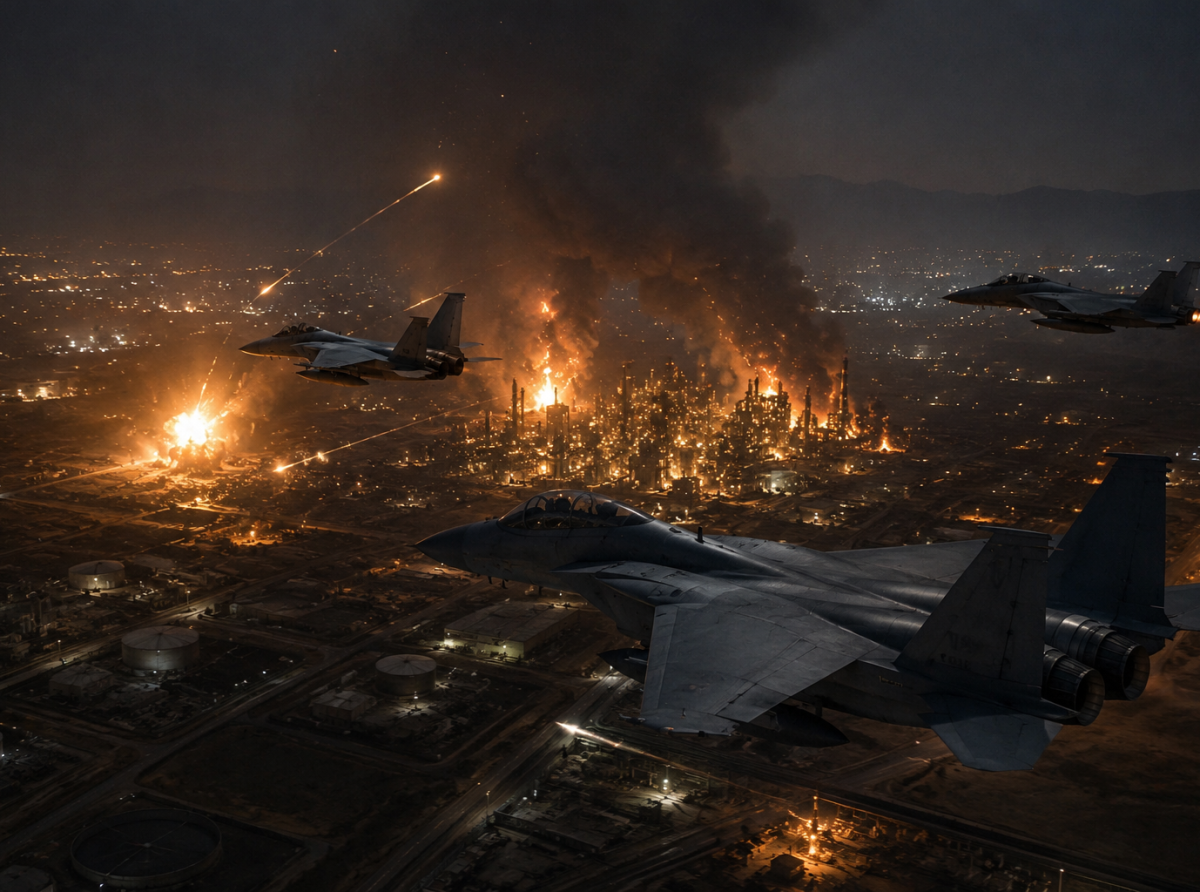
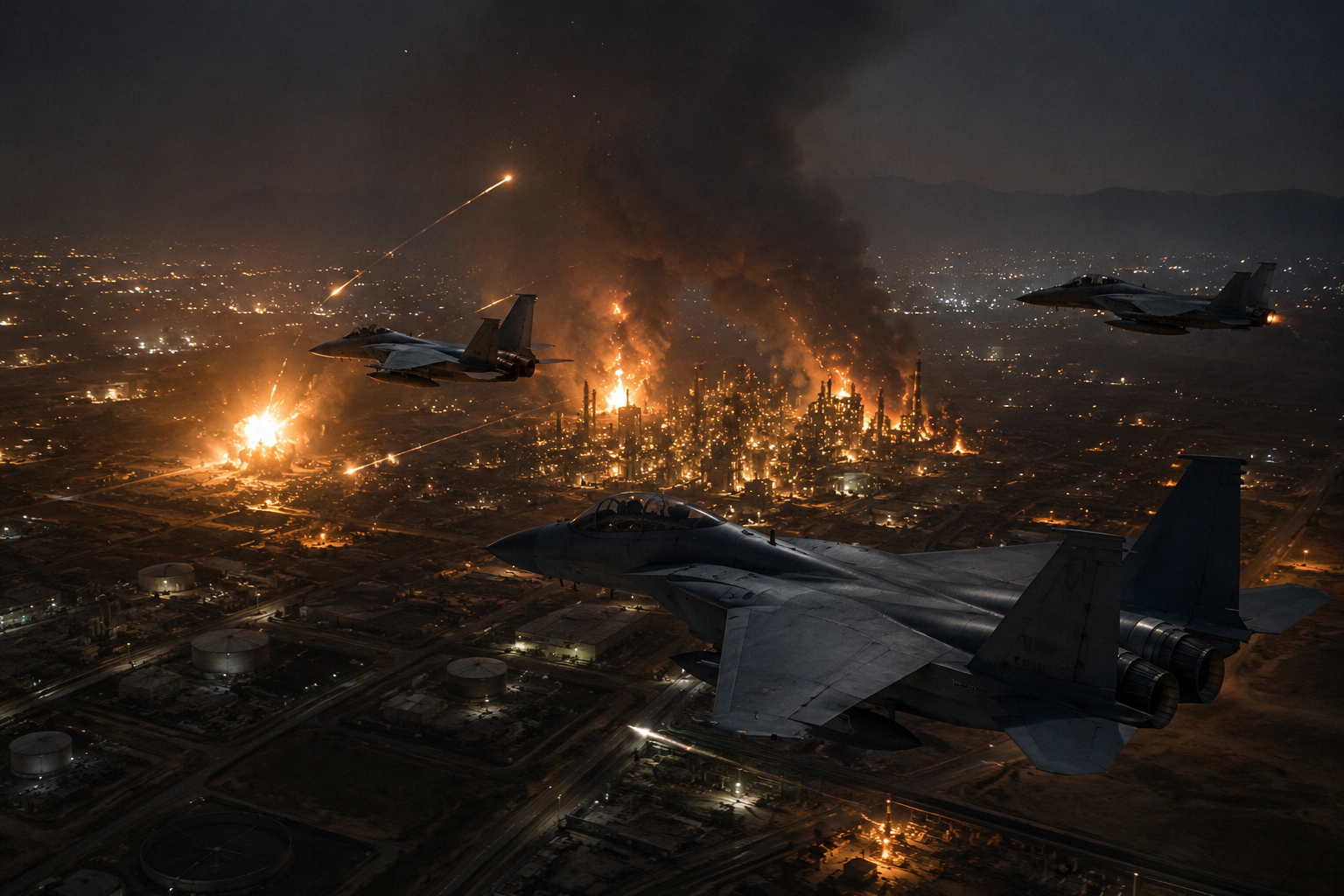
The latest U.S. strikes on Iranian targets reveal a geopolitical reality that financial markets, energy traders and governments are only beginning to fully price in: modern conflicts no longer follow the traditional sequence of escalation, negotiation and settlement. War and diplomacy are now unfolding simultaneously.Early Tuesday morning, American forces launched what CENTCOM described as “self-defense strikes” against missile launchers and Iranian naval units in southern Iran. According to U.S. officials, the operation was intended to protect American forces and prevent threats to maritime security after Iranian boats allegedly attempted to deploy mines near critical shipping routes.
At the same time, the White House continued presenting negotiations with Tehran as close to completion.
President Donald Trump stated that talks with Iran were “going well,” while warning that failure to finalize an agreement could trigger military action “on an even larger and more powerful scale.” Secretary of State Marco Rubio reinforced Washington’s position, declaring that the Strait of Hormuz would remain open “in any case.”
The contradiction is no longer accidental. It increasingly reflects the structure of modern geopolitical strategy itself.
Military Pressure Has Become Part of Diplomacy
For decades, military operations were generally viewed as the collapse of diplomacy. Today, they increasingly function as diplomatic instruments.Washington’s current approach toward Iran demonstrates this shift clearly. Limited strikes, naval interceptions, sanctions pressure and negotiations are no longer treated as separate tracks. They operate together as part of a single leverage system designed to pressure adversaries without triggering full-scale regional war.
This explains why military incidents between the United States and Iran continue even after the April ceasefire agreement.
Later in April, U.S. Marines seized the Iranian cargo vessel Tuska. In May, both sides exchanged fire in the Strait of Hormuz while accusing each other of initiating the confrontation. Now direct strikes have resumed again under the language of “defensive operations.”
The result is a new type of controlled instability where escalation itself becomes normalized.
America Fires at Iran While Negotiating Peace: Why Markets No Longer Believe in “Temporary” Conflicts
Why the Strait of Hormuz Remains the Center of Global Risk
The entire crisis ultimately revolves around one strategic chokepoint: the Strait of Hormuz.Roughly 20% of global oil flows pass through the narrow maritime corridor connecting the Persian Gulf to international markets. Any threat to shipping immediately affects energy prices, freight insurance, inflation expectations and global supply chains.
That is why Washington continues emphasizing that Hormuz must remain operational regardless of negotiations.
The issue extends far beyond Iran itself. The Strait functions as a pressure valve for the global economy. If energy flows become unreliable, the consequences spread rapidly into transportation, manufacturing, food logistics and monetary policy.
This explains why even limited military actions in the region receive disproportionate market attention.
Oil Markets Are Reacting With Unusual Restraint
Despite renewed military activity, oil markets are not behaving as they did during earlier Middle Eastern crises.U.S. West Texas Intermediate futures fell roughly 5% toward $91.87 per barrel, while Brent crude rose 2.14% to approximately $98.20. The divergence reflects uncertainty rather than panic.
Under previous geopolitical conditions, direct U.S. strikes inside Iran could have triggered an explosive oil rally far above $100 per barrel. Instead, traders increasingly assume that both Washington and Tehran are trying to avoid uncontrolled escalation.
Markets appear to believe that military pressure is being used to strengthen negotiations rather than replace them.
This confidence is partly economic. Neither side is positioned to absorb the consequences of prolonged conflict.
Iran remains under heavy economic strain after years of sanctions, capital outflows and declining foreign investment. The United States faces its own vulnerabilities: elevated inflation, politically sensitive fuel prices and growing pressure on consumer spending.
A major disruption in Gulf energy exports would immediately worsen inflationary risks globally.
That economic reality creates a fragile but important form of mutual restraint.
The Real Goal Is Stability Before Energy Inflation Returns
Behind the military language lies a far more practical concern: energy prices.Washington understands that sustained oil prices near or above $100 per barrel would create direct pressure on inflation, monetary policy and consumer confidence. Rising gasoline prices remain one of the fastest ways to destabilize political sentiment inside the United States.
This helps explain the urgency behind current negotiations.
As analyst Chen noted, markets increasingly believe the core objective is straightforward: end the conflict before energy costs begin feeding another inflation cycle. In that sense, geopolitical strategy is becoming deeply connected to domestic economic management.
The issue is no longer simply whether Iran possesses certain military or nuclear capabilities. The issue is whether global energy stability can be restored quickly enough to prevent another wave of inflation across major economies.
The Uranium Dispute Reveals the Broader Strategic Objective
Trump’s additional statements regarding Iran’s enriched uranium reserves also clarify Washington’s long-term objective.According to the president, Iranian uranium stockpiles would either be transferred to the United States for destruction, eliminated inside Iran or removed to another approved location. The message signals that Washington is pursuing not merely de-escalation, but structural limitations on Iran’s future strategic leverage.
At the same time, Trump again pushed Arab states toward expanding the Abraham Accords framework with Israel.
That effort reveals the broader regional ambition behind the negotiations: restructuring Middle Eastern alliances while reducing Iran’s capacity to project influence across the Gulf.
However, resistance remains significant. Pakistan publicly rejected attempts to connect regional diplomacy with normalization agreements involving Israel, signaling that major fractures inside the Islamic world remain unresolved.
The World Economy Is Learning to Operate Inside Permanent Crisis
Perhaps the most important shift is psychological.Global markets are adapting to a world where geopolitical instability is no longer treated as exceptional. Investors increasingly assume that military incidents, sanctions, cyber pressure and diplomatic negotiations will coexist continuously.
This normalization changes how risk itself is priced.
Equity markets remain relatively resilient despite repeated Gulf incidents. Bond markets have avoided panic. Oil volatility remains elevated but controlled. Investors are effectively betting that modern powers will continue managing escalation carefully enough to avoid systemic collapse.
That assumption may hold in the short term.
But the longer military operations and negotiations unfold simultaneously, the greater the risk of strategic miscalculation. In highly militarized environments like the Strait of Hormuz, even limited incidents can rapidly escape political control.
The current Iran crisis is no longer simply about nuclear negotiations or regional security. It reflects a broader transformation in global power management, where military force and diplomacy increasingly operate together rather than separately.
For markets, this creates a difficult new environment: one where geopolitical shocks become frequent but incomplete, dangerous but contained, disruptive but not catastrophic.
Over the next three to six months, the most likely scenario remains continued tactical escalation combined with attempts to finalize a broader agreement. Oil prices will remain highly sensitive to shipping security and military incidents near Hormuz, while global markets will continue balancing optimism about de-escalation against the growing reality of permanent geopolitical instability.
For markets, this creates a difficult new environment: one where geopolitical shocks become frequent but incomplete, dangerous but contained, disruptive but not catastrophic.
Over the next three to six months, the most likely scenario remains continued tactical escalation combined with attempts to finalize a broader agreement. Oil prices will remain highly sensitive to shipping security and military incidents near Hormuz, while global markets will continue balancing optimism about de-escalation against the growing reality of permanent geopolitical instability.
By Claire Whitmore
May 26, 2026
Join us. Our Telegram: @forexturnkey
All to the point, no ads. A channel that doesn't tire you out, but pumps you up.
May 26, 2026
Join us. Our Telegram: @forexturnkey
All to the point, no ads. A channel that doesn't tire you out, but pumps you up.




Report
My comments