




Apple AI Strategy 2026: Can John Ternus Catch Up?
Apple AI Strategy 2026: Can John Ternus Catch Up?
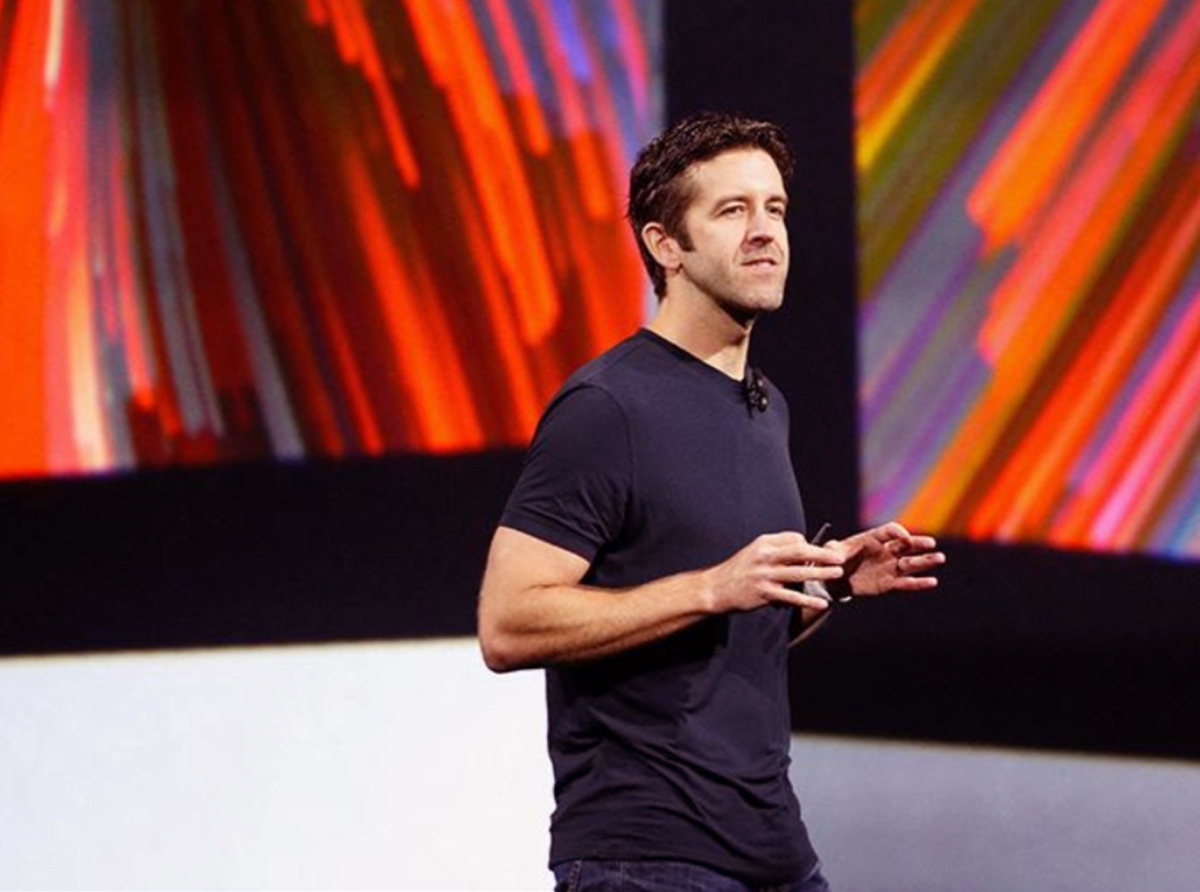
Apple enters a new era as John Ternus prepares to lead the company, with the key challenge being a clear and competitive AI strategy amid rising pressure from Microsoft, Google, and other tech giants dominating the artificial intelligence race.
The leadership transition at Apple Inc. marks a strategic turning point. After 15 years under Tim Cook, the company remains one of the most valuable in the world, approaching a $4 trillion valuation (April 2026 estimates). However, beneath this stability lies a growing structural issue: Apple’s lag in artificial intelligence compared to its largest competitors.
For incoming CEO John Ternus, the challenge is not operational continuity — it is strategic repositioning.
The leadership transition at Apple Inc. marks a strategic turning point. After 15 years under Tim Cook, the company remains one of the most valuable in the world, approaching a $4 trillion valuation (April 2026 estimates). However, beneath this stability lies a growing structural issue: Apple’s lag in artificial intelligence compared to its largest competitors.
For incoming CEO John Ternus, the challenge is not operational continuity — it is strategic repositioning.
Why Apple’s AI Strategy Is Under Pressure
While competitors aggressively invest in AI infrastructure, Apple has followed a more conservative path. Companies such as Microsoft, Google, Amazon, and Meta Platforms continue expanding data centers and AI capabilities at scale.Apple’s approach focuses on integration rather than infrastructure. This creates a divergence:
Competitors dominate large-scale AI models and cloud ecosystems
Apple dominates hardware, chip design, and ecosystem control
The market question in 2026 is whether device-centric AI can offset cloud-based leadership.
Apple Intelligence: Limited Progress So Far
Apple introduced its AI layer through Apple Intelligence, integrating features such as text rewriting, summarization, and image generation. The system relies partly on external providers, including OpenAI and tools like ChatGPT.Parallel ecosystem dynamics:
Google Gemini powers Android AI features
Claude is widely used on iOS
Meta AI expands across platforms
As of April 2026, these applications rank among the most downloaded on iOS, indicating that user engagement with AI on Apple devices is largely driven by third-party solutions.
Hardware as a Strategic Bet
Apple’s long-term AI thesis is built around on-device processing. Since 2017, the company has integrated neural engines into its chips, enabling local AI computation without relying fully on the cloud.Recent financial indicator:
iPhone revenue: $85.3 billion (+23% YoY, latest report, April 2026, USA market)
Strong hardware performance provides Apple with a time buffer. However, this buffer depends on continued innovation.
Future product directions include:
AI-powered wearables (glasses, sensor-based devices)
Spatial computing ecosystems
Foldable smartphones (under development)
Apple AI Strategy 2026: Can John Ternus Catch Up?
What Is Known About John Ternus: Path to Cupertino
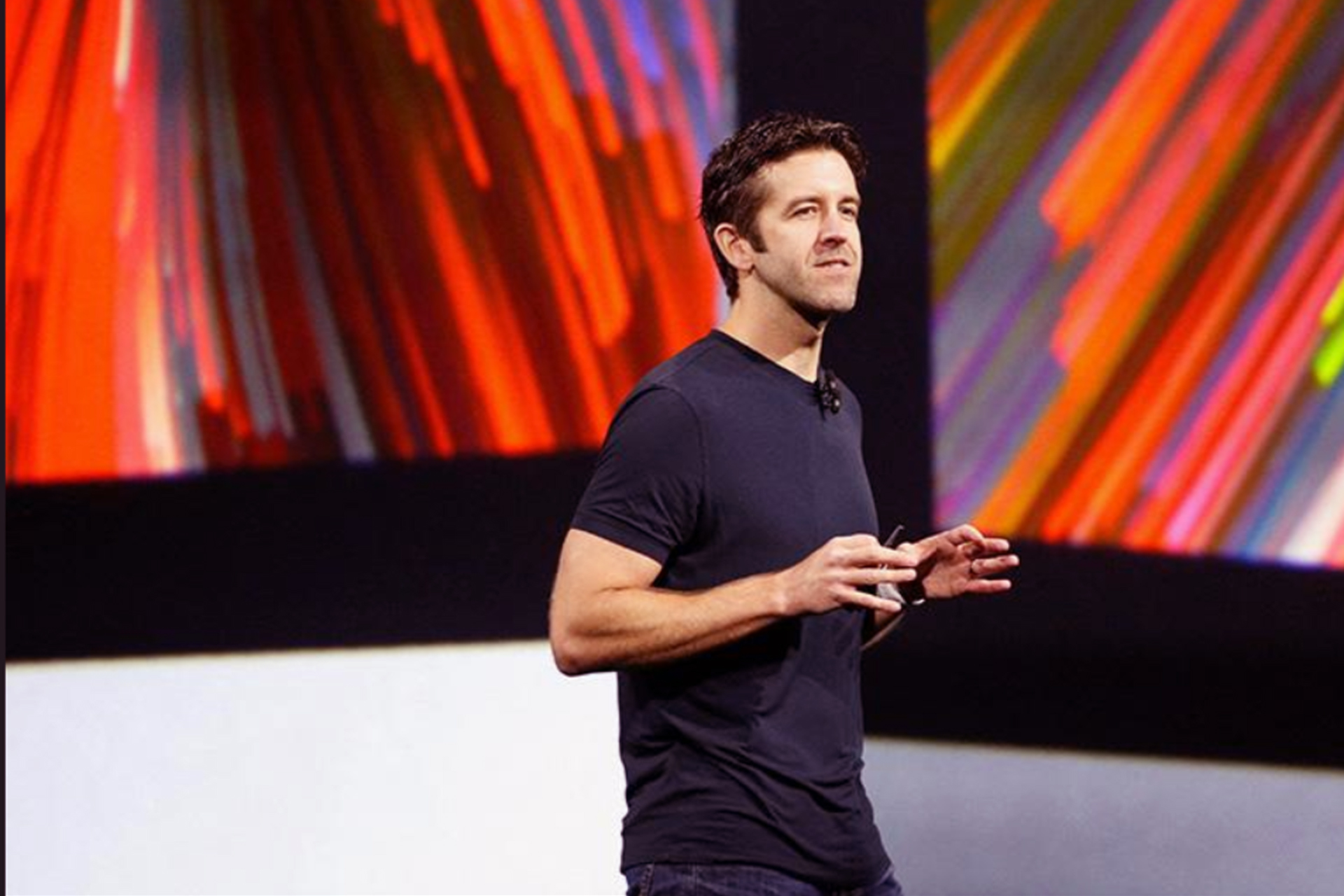
John Ternus represents a different leadership profile — deeply technical, product-focused, and internally developed within Apple.He graduated from the University of Pennsylvania in 1997 with a degree in mechanical engineering. His thesis project focused on assistive technology for people with paralysis, controlled via head movements — an early indication of his engineering orientation.
Before joining Apple, he worked at Virtual Research Systems, a company involved in virtual reality technologies before their mainstream adoption.
In 2001, he joined Apple during the early phase of the company’s recovery under Steve Jobs.
Apple Veteran: Engineering Core
Ternus has spent more than 25 years at Apple, starting with Mac display engineering. By 2005, he led development of the iMac G5, where he implemented a magnetic display mounting system — a design decision balancing aesthetics and serviceability.In 2013, he became Vice President of Hardware Engineering, overseeing Mac and iPad, and later contributing to iPhone strategy. One of his notable decisions was introducing LiDAR exclusively in Pro iPhone models, preserving product differentiation and margins.
In 2021, he was appointed Senior Vice President of Hardware Engineering, consolidating development of iPhone, Mac, iPad, Apple Watch, and AirPods under a unified structure.
One of Ternus’s most significant contributions was the transition from Intel processors to Apple Silicon in 2020. This required a full redesign of device architecture — including thermal systems and internal layouts.
Results:
Improved performance-to-efficiency ratio
Launch of new MacBook Pro and iMac generations (2021 onward)
He also worked closely with Asian manufacturing partners, adapting complex engineering designs for mass production without compromising quality.
In recent years, his involvement expanded to new product categories:
Participation in development of Apple Vision Pro (2023)
Oversight of major iPhone redesigns, including 2025 models
Involvement in early-stage foldable device testing (prototype phase)
Ternus is set to assume the CEO role on September 1. At age 50, he mirrors the leadership transition timing of Tim Cook after Steve Jobs.
The Core Challenge: AI Integration
Despite hardware leadership, Apple’s AI positioning remains underdeveloped. Apple Intelligence has not significantly shifted market dynamics, and Siri’s evolution has faced delays, including reliance on external AI models.Key structural issues:
Limited proprietary AI model development
Dependence on third-party AI ecosystems
Slower rollout of advanced AI features
At the same time, Apple is expanding AI into home devices and integrated ecosystems — areas now under Ternus’s supervision.
Apple’s long-standing emphasis on privacy differentiates it from competitors. However, this also limits data collection, which is critical for AI training and personalization.
Strategic dilemma:
Maintain privacy leadership
Compete in personalized AI services
This balance will shape Apple’s positioning in the next cycle.
The next 12–24 months will define whether Apple can close the AI gap.
Scenario framework:
1. Successful Integration
Apple leverages hardware ecosystem and expands on-device AI capabilities.
2. Strategic Lag
Competitors dominate AI interfaces, reducing Apple’s influence over user interaction.
Global dynamics:
USA: aggressive AI investment by Big Tech
EU: regulatory constraints shaping AI deployment
Asia: rapid adoption of AI-enabled devices
Apple’s transition to John Ternus comes at a moment when technological leadership is shifting toward artificial intelligence. The company retains strong fundamentals — hardware dominance, ecosystem control, and financial strength. However, its long-term competitiveness will depend on how effectively it integrates AI into this foundation.
The next phase of Apple’s evolution will not be defined by devices alone — but by intelligence embedded within them.
Scenario framework:
1. Successful Integration
Apple leverages hardware ecosystem and expands on-device AI capabilities.
2. Strategic Lag
Competitors dominate AI interfaces, reducing Apple’s influence over user interaction.
Global dynamics:
USA: aggressive AI investment by Big Tech
EU: regulatory constraints shaping AI deployment
Asia: rapid adoption of AI-enabled devices
Apple’s transition to John Ternus comes at a moment when technological leadership is shifting toward artificial intelligence. The company retains strong fundamentals — hardware dominance, ecosystem control, and financial strength. However, its long-term competitiveness will depend on how effectively it integrates AI into this foundation.
The next phase of Apple’s evolution will not be defined by devices alone — but by intelligence embedded within them.
Written by Ethan Blake
Independent researcher, fintech consultant, and market analyst.
April 21, 2026
Join us. Our Telegram: @forexturnkey
All to the point, no ads. A channel that doesn't tire you out, but pumps you up.
Independent researcher, fintech consultant, and market analyst.
April 21, 2026
Join us. Our Telegram: @forexturnkey
All to the point, no ads. A channel that doesn't tire you out, but pumps you up.




Report
My comments