




Enhanced Games: When Sports Stop Fighting Doping and Start Monetizing It
Enhanced Games: When Sports Stop Fighting Doping and Start Monetizing It
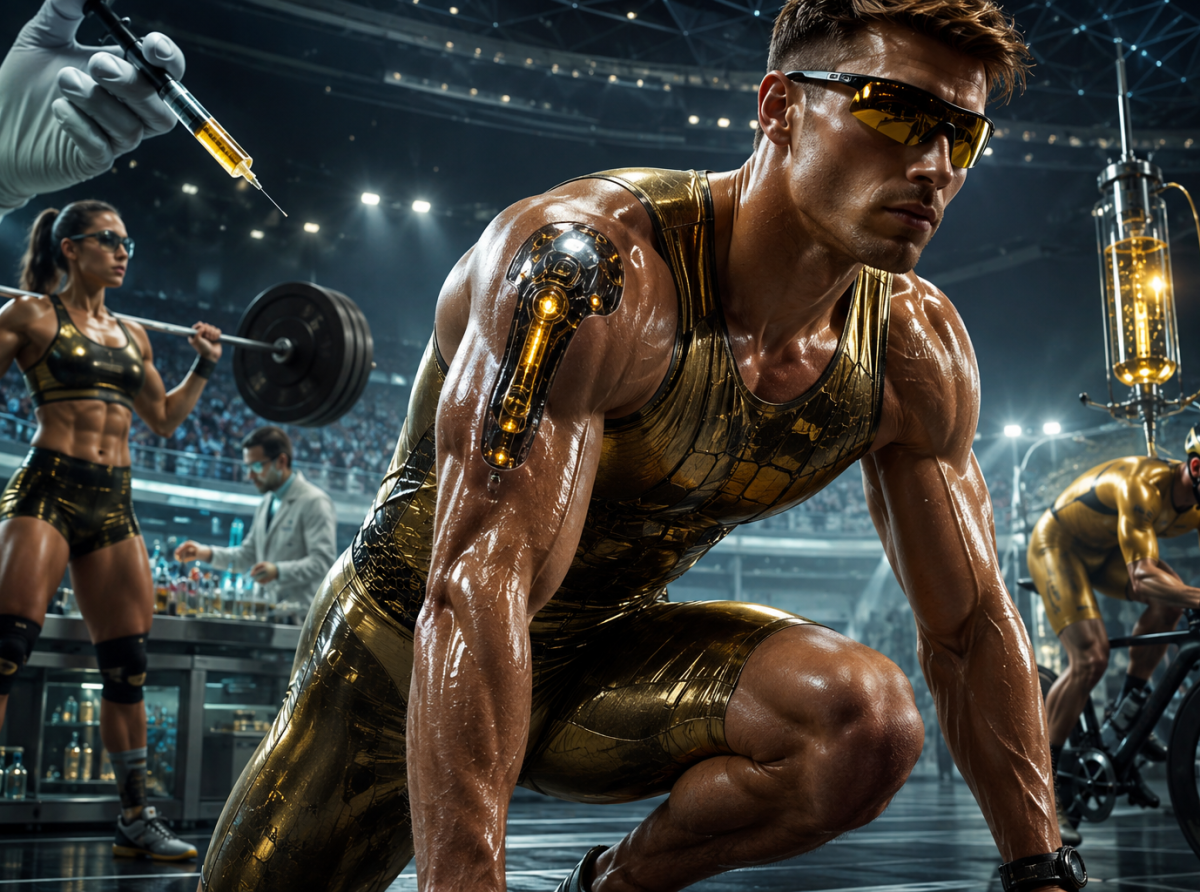
Enhanced Games are not just a sports experiment. They reflect a broader cultural shift where biotechnology, optimization culture, and commercial entertainment increasingly outweigh traditional ideas of fairness, natural ability, and athletic ethics.
The End of the Anti-Doping Era?
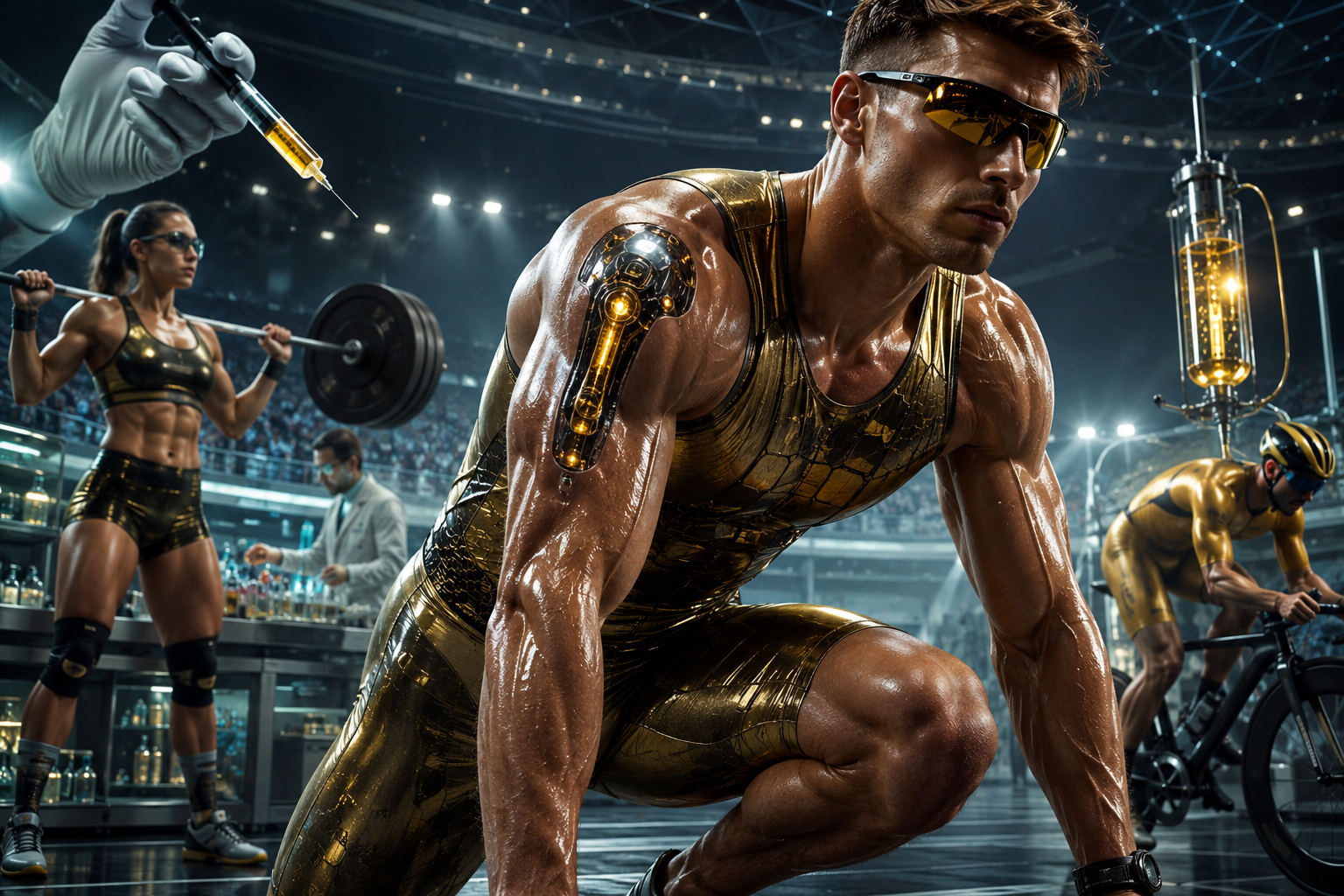
Professional sport spent decades building one central narrative: performance-enhancing drugs destroy fairness. Anti-doping systems, testing agencies, athlete suspensions, and Olympic regulations were all designed around preserving the idea of “clean competition.” The Enhanced Games openly reject that philosophy.In Las Vegas, organizers launched a competition where athletes are allowed to use medically supervised performance-enhancing substances and technologies. Steroids, hormone optimization, advanced recovery protocols, and experimental biomedical methods are no longer hidden risks — they are part of the product itself.
The project positions itself as a technological evolution of sports rather than a rebellion against it. Organizers argue that elite athletics has already become inseparable from science, medicine, analytics, recovery engineering, and genetic optimization. According to their vision, anti-doping systems merely force enhancement underground instead of eliminating it.
The result is a new category of competition: not “natural humans versus natural humans,” but optimized humans competing through openly enhanced performance.
Enhanced Games: When Sports Stop Fighting Doping and Start Monetizing It
Why the World Suddenly Pays Attention
Enhanced Games immediately attracted attention because they combined three explosive elements: biotechnology, entertainment economics, and ideological conflict with the Olympic model.The financial incentives are enormous. Prize pools reach tens of millions of dollars, while athletes can reportedly earn up to $1 million for breaking iconic records in sprinting or swimming. In a sports economy where many professional athletes struggle financially outside top leagues, this creates a powerful alternative market.
The timing also matters. Modern audiences are increasingly fascinated by optimization culture. Biohacking, longevity clinics, testosterone therapy, cognitive enhancement, wearable biometrics, and AI-driven health tracking have already become mainstream among executives, entrepreneurs, and influencers. Enhanced Games simply push that logic into competitive sports.
For younger audiences raised in algorithmic culture, the distinction between “natural” and “engineered” success already feels less absolute than it did decades ago.
Silicon Valley Sees More Than Sports
One reason the project became impossible to ignore is the investor ecosystem surrounding it. Reports linked the initiative to technology investors and venture capital circles associated with controversial biotech and accelerationist ideas.This matters because Enhanced Games are increasingly viewed not as a niche sports event, but as a live demonstration of future human enhancement markets.
The logic resembles Silicon Valley disruption culture:
first optimize software, then automate labor, then optimize biology itself.
In that framework, athletes become prototypes for broader commercial industries:
longevity treatments, cognitive enhancement drugs, military performance optimization, workplace productivity engineering, and premium healthcare technologies.
Critics argue that this transforms the athlete into a laboratory asset rather than a competitor. Supporters counter that elite athletes have always pushed their bodies beyond normal limits — only now the process becomes transparent instead of hidden.
The Real Debate Is No Longer About Steroids
The public argument often focuses on doping substances, but the deeper issue is far larger: who defines the limits of acceptable human enhancement?Modern professional sports already tolerate many forms of technological inequality:
advanced recovery chambers, genetic analysis, custom nutrition systems, biomechanical optimization, expensive medical teams, and high-performance equipment.
Enhanced Games expose an uncomfortable contradiction. Traditional sports celebrate scientific progress when it improves training efficiency or injury recovery, but condemn enhancement once it directly affects measurable performance.
The line between medicine and enhancement becomes increasingly difficult to defend.
A swimmer using advanced recovery peptides, a runner sleeping in altitude simulation chambers, and an athlete receiving hormone optimization all exist on different points of the same technological spectrum.
Enhanced Games remove the illusion that elite sports remain purely “natural.”
Why Anti-Doping Organizations Are Alarmed
Organizations like WADA strongly oppose the project because they believe normalization is more dangerous than the substances themselves.The concern is cultural, not only medical.
If enhancement becomes publicly celebrated and commercially rewarded, younger athletes may begin to see pharmaceutical optimization as mandatory rather than exceptional. The pressure to chemically compete could spread downward through amateur sports, college athletics, and youth development systems.
Critics also argue that financial incentives distort informed consent. When millions of dollars are attached to records, athletes may accept long-term health risks that would otherwise seem irrational.
Supporters respond with a different argument: elite sports already pressure athletes into physical sacrifice. Chronic injuries, neurological damage, extreme weight cuts, and overtraining are widely accepted across multiple disciplines. From that perspective, medically supervised enhancement appears less hypocritical than pretending modern sports are entirely “clean.”
The Commercialization of Human Limits
Enhanced Games may ultimately become less important as a sports competition than as a media and investment model.The project sits at the intersection of several powerful trends:
attention economics, biotech investment, creator-style branding, and the monetization of extreme performance.
Traditional sports organizations still rely on ideals like fairness, equal conditions, and historical continuity. Enhanced Games operate more like modern entertainment platforms: maximize spectacle, maximize performance, maximize engagement.
That difference is crucial.
The Olympics ask:
“How fast can the best natural athlete run?”
Enhanced Games ask:
“How far can human performance go if optimization itself becomes legal?”
Those are fundamentally different products.
The rise of Enhanced Games reflects a broader transformation in how modern society views the body itself.
For decades, enhancement was framed as cheating. Increasingly, it is framed as self-improvement.
From cosmetic procedures and nootropics to longevity medicine and AI-driven health monitoring, modern culture increasingly rewards optimization rather than authenticity. Enhanced Games simply make that philosophy impossible to ignore.
This is why the tournament generates such strong reactions. The controversy is not only about athletics. It is about whether society still believes there should be limits to engineered performance at all.
And that debate is unlikely to remain inside stadiums for long.
From cosmetic procedures and nootropics to longevity medicine and AI-driven health monitoring, modern culture increasingly rewards optimization rather than authenticity. Enhanced Games simply make that philosophy impossible to ignore.
This is why the tournament generates such strong reactions. The controversy is not only about athletics. It is about whether society still believes there should be limits to engineered performance at all.
And that debate is unlikely to remain inside stadiums for long.
By Jake Sullivan
May 25, 2026
Join us. Our Telegram: @forexturnkey
All to the point, no ads. A channel that doesn't tire you out, but pumps you up.
May 25, 2026
Join us. Our Telegram: @forexturnkey
All to the point, no ads. A channel that doesn't tire you out, but pumps you up.





Report
My comments