




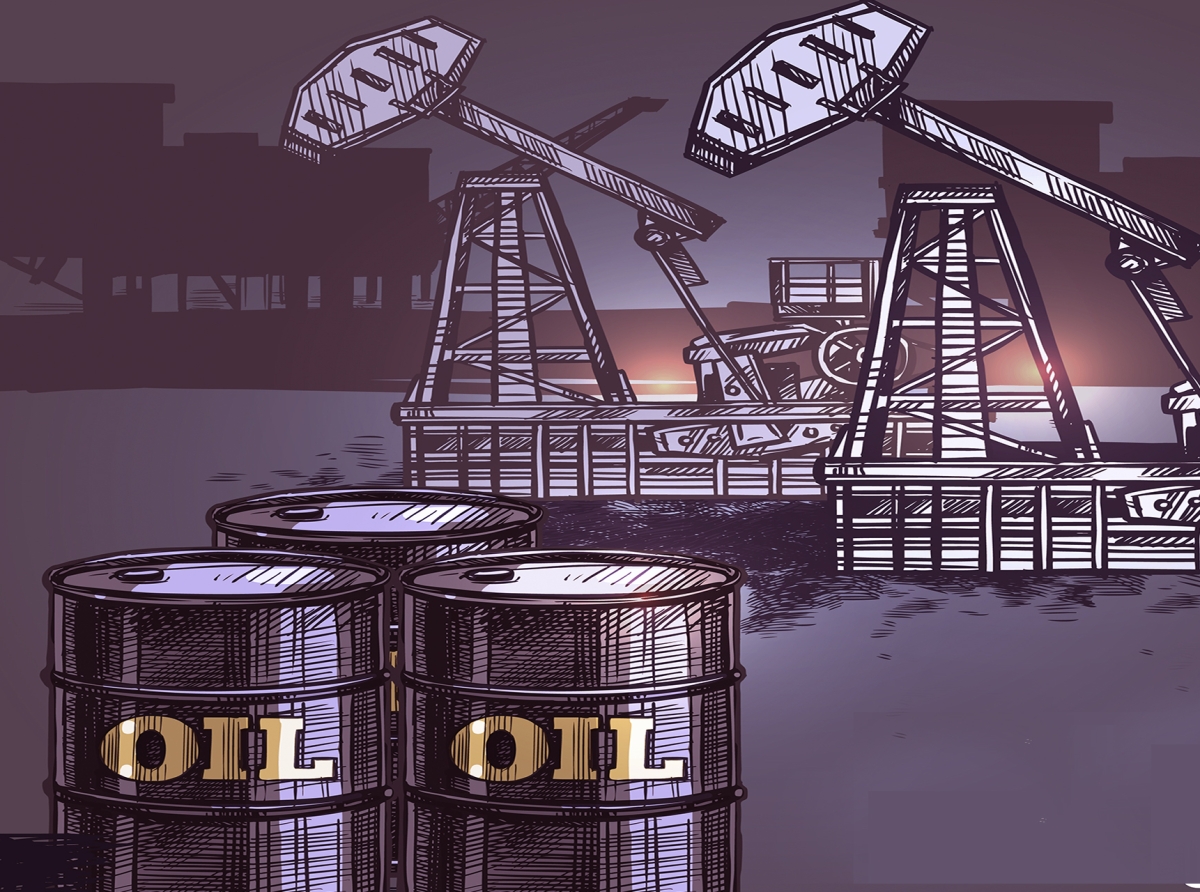
Oil Price Falls on US-Iran Talks Signals
Oil prices declined after signals of possible US-Iran diplomatic progress, despite a partial blockade of Iranian shipping, reflecting how geopolitical risk premiums in energy markets can reverse quickly.
Oil markets reacted sharply to mixed geopolitical signals. On one side, the United States escalated pressure by restricting Iranian shipping flows in the Persian Gulf. On the other, comments from JD Vance suggested that diplomatic negotiations with Iran remain possible. This dual narrative triggered a classic market response: risk repricing.
As of 2:30 a.m. ET (April 2026, CME data, USA), WTI crude futures for May delivery dropped 1.73% to $97.34 per barrel, while Brent crude for June delivery declined 0.89% to $98.46. The spread between benchmarks remained narrow, indicating synchronized global sentiment rather than regional divergence.
As of 2:30 a.m. ET (April 2026, CME data, USA), WTI crude futures for May delivery dropped 1.73% to $97.34 per barrel, while Brent crude for June delivery declined 0.89% to $98.46. The spread between benchmarks remained narrow, indicating synchronized global sentiment rather than regional divergence.
Oil Price Falls on US-Iran Talks Signals
Why did oil prices fall despite a US blockade?
At first glance, the decline seems counterintuitive. A blockade targeting Iranian oil flows—particularly through the strategically critical Strait of Hormuz—should tighten supply and push prices higher.However, markets are forward-looking. Traders are pricing not only current disruptions but also the probability of resolution.
Structured market data:
Iran oil exports: ~1.7 million barrels/day (March 2026, Commonwealth Bank, Australia)
Strait of Hormuz share: ~20% of global oil flows (EIA, USA)
WTI volatility index: 9.1 (April 2026, CME, USA)
The key driver behind the price drop is expectation. If negotiations resume, supply risks may ease, reducing the geopolitical premium embedded in oil prices.
What did JD Vance say—and why it matters for markets?
According to Vance, the next phase of negotiations depends on Tehran. His statement implies that the U.S. has already proposed terms, particularly regarding Iran’s nuclear program.
This matters because oil markets react not only to actions but to rhetoric. Statements from high-level officials often serve as early signals of policy direction.
In this case, the message was clear: escalation is not inevitable.
For traders, such signals can trigger short-term corrections, especially after recent price spikes driven by conflict fears.
How geopolitical risk affects forex and commodities
Oil is not just a commodity—it is a macroeconomic driver. Its movements directly impact currency markets, inflation expectations, and central bank policies.Key correlations observed (April 2026, TradingView global data):
USD/CAD inverse correlation with oil: -0.78
EUR/USD sensitivity to energy inflation: moderate (ECB, EU)
Emerging market currencies: highly sensitive to oil volatility
When oil prices fall:
Oil-exporting currencies (CAD, NOK) tend to weaken
Oil-importing economies (EU, Japan) benefit from lower costs
Inflation expectations may ease, influencing central bank decisions
This dynamic makes oil a critical instrument for forex traders.
Regional perspective: US, EU, and Asia market reactions
Geopolitical developments in the Middle East rarely affect regions equally.United States: Energy independence reduces direct supply risk but not price volatility
European Union: Highly exposed to energy imports; price drops support economic stability
Asia (China, Japan, South Korea): Strong dependence on Gulf oil flows increases sensitivity to disruptions
According to the International Energy Agency (IEA, April 2026), Asia accounts for over 60% of incremental global oil demand growth, making it the most vulnerable region to supply shocks.
Scenario analysis: what happens next in oil markets?
There are three primary scenarios traders are pricing:
1. Conciliatory Solution (Baseline)
Negotiations resume, sanctions are gradually eased → oil stabilizes below $95
2. Limited Escalation
The blockade continues, but there is no complete destruction → oil fluctuates between $95 and $105.
3. Full-scale Conflict
Violation of the Strait of Hormuz → oil jumps above $120
Each scenario carries different implications for forex strategies, particularly for commodity-linked currencies.
For short-term traders, volatility creates opportunity. However, geopolitical markets require disciplined risk management.
Key considerations:
Monitor official statements (White House, Iran government)
Track shipping data in the Persian Gulf
Watch options market for volatility spikes
Avoid overleveraging during headline-driven moves
Oil markets are once again demonstrating how quickly sentiment can shift. Even in the face of tangible supply risks, expectations of diplomacy can override fear-driven pricing. For traders and investors, this reinforces a critical principle: markets move not on events alone, but on the probability of their outcomes.
Written by Ethan Blake
Independent researcher, fintech consultant, and market analyst.
April 14, 2026
Join us. Our Telegram: @forexturnkey
All to the point, no ads. A channel that doesn't tire you out, but pumps you up.
Independent researcher, fintech consultant, and market analyst.
April 14, 2026
Join us. Our Telegram: @forexturnkey
All to the point, no ads. A channel that doesn't tire you out, but pumps you up.





Report
My comments