




SpaceX Joins the Nasdaq-100: Why One Index Decision Could Reshape Passive Investing
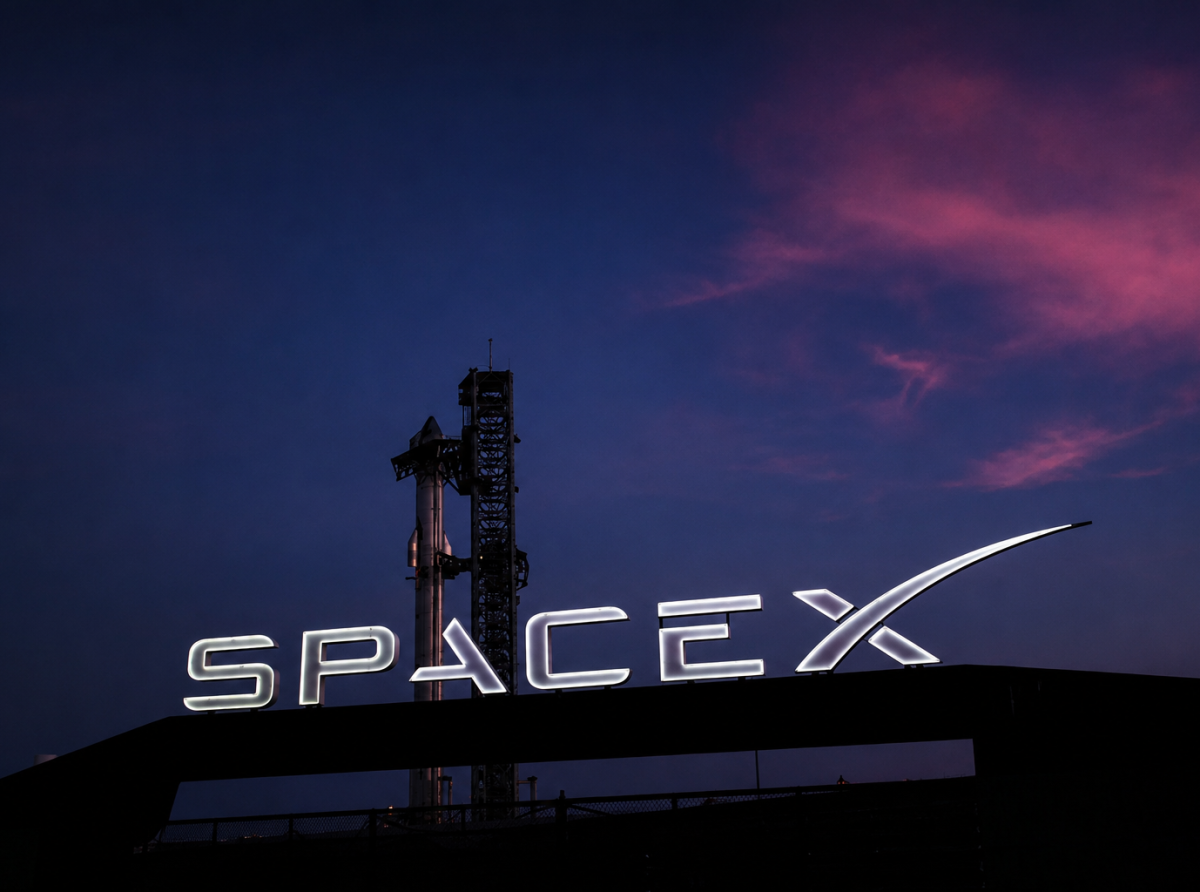
SpaceX Joins the Nasdaq-100: Why One Index Decision Could Reshape Passive Investing
SpaceX has joined the Nasdaq-100 after Nasdaq introduced faster inclusion rules for major IPOs. Because more than $800 billion in assets track the index, passive investment funds must automatically purchase SpaceX shares regardless of market conditions. The inclusion increases institutional ownership, liquidity and global visibility while highlighting the growing influence of passive investing on equity markets.
For decades, joining a major stock index has been viewed as recognition of corporate success.
Today, it represents something far more powerful.
When a company enters a benchmark followed by hundreds of billions of dollars in passive investments, the decision immediately alters capital flows. Investors do not need to analyze earnings, evaluate valuation multiples or decide whether they like the business model. The buying happens automatically. Index-tracking funds simply have no choice.
That is precisely what is happening with SpaceX.
The aerospace company has officially entered the Nasdaq-100, becoming one of the most significant additions to the technology benchmark in recent years. The inclusion follows recent changes in Nasdaq's methodology that accelerated the admission of newly listed companies after initial public offerings, allowing SpaceX to join the index only weeks after beginning public trading.
The implications extend well beyond one company's share price.
More than 200 exchange-traded funds and investment products, collectively managing approximately $800 billion, replicate the Nasdaq-100. Every one of these portfolios must now purchase SpaceX shares to maintain accurate exposure to the benchmark.
The result is a rare financial event where demand is generated not by changing investor sentiment, but by the mechanics of modern passive investing.
Today, it represents something far more powerful.
When a company enters a benchmark followed by hundreds of billions of dollars in passive investments, the decision immediately alters capital flows. Investors do not need to analyze earnings, evaluate valuation multiples or decide whether they like the business model. The buying happens automatically. Index-tracking funds simply have no choice.
That is precisely what is happening with SpaceX.
The aerospace company has officially entered the Nasdaq-100, becoming one of the most significant additions to the technology benchmark in recent years. The inclusion follows recent changes in Nasdaq's methodology that accelerated the admission of newly listed companies after initial public offerings, allowing SpaceX to join the index only weeks after beginning public trading.
The implications extend well beyond one company's share price.
More than 200 exchange-traded funds and investment products, collectively managing approximately $800 billion, replicate the Nasdaq-100. Every one of these portfolios must now purchase SpaceX shares to maintain accurate exposure to the benchmark.
The result is a rare financial event where demand is generated not by changing investor sentiment, but by the mechanics of modern passive investing.
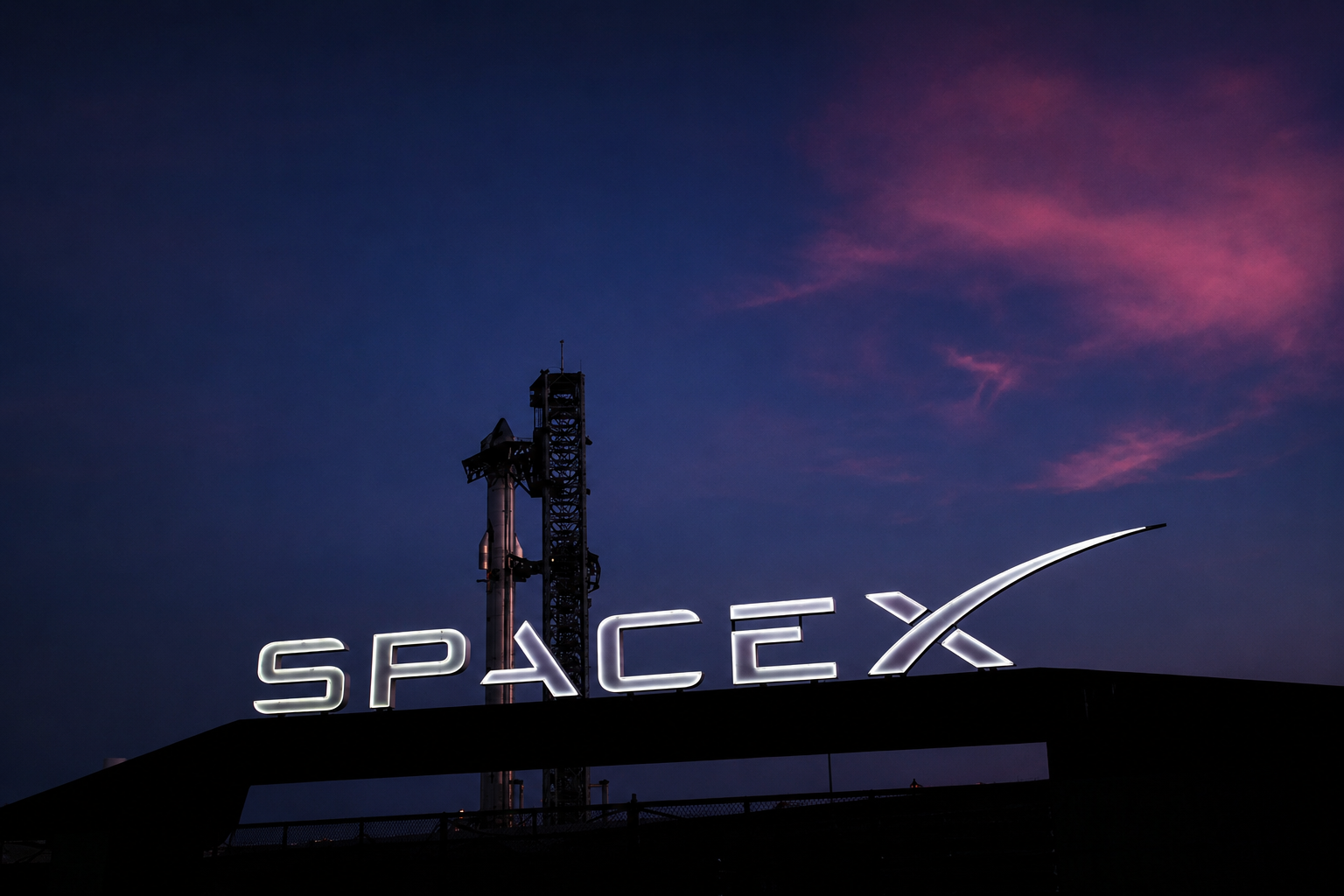
SpaceX Joins the Nasdaq-100: Why One Index Decision Could Reshape Passive Investing
Indexes Have Become Powerful Capital Allocation Machines
Modern stock indexes no longer serve merely as market indicators.They increasingly determine where capital flows.
Over the past two decades, passive investing has transformed global financial markets. Instead of selecting individual companies, millions of investors now allocate money into exchange-traded funds that simply mirror benchmark indexes. Every new contribution automatically purchases shares according to predefined weightings.
This has fundamentally changed the relationship between companies and financial markets.
Inclusion in a major benchmark now creates immediate structural demand that is largely independent of valuation or market sentiment.
Companies entering flagship indexes often experience a surge in trading activity as institutional investors rebalance portfolios. Liquidity improves, ownership becomes more diversified and the company's visibility among global asset managers increases substantially. SpaceX is now entering precisely this ecosystem.
Why SpaceX Qualified So Quickly
Historically, newly public companies waited several months before becoming eligible for the Nasdaq-100.That waiting period reflected concerns about liquidity, price discovery and market stability following an initial public offering. Nasdaq recently revised those rules.
The exchange reduced the waiting period from at least three months to approximately 15 days for qualifying IPOs, allowing exceptionally large listings to enter the index far earlier than under previous methodology.
The change was not accidental. SpaceX became one of the largest public offerings ever completed, with a market capitalization exceeding $2 trillion, immediately placing it among America's largest publicly traded technology companies.
Nasdaq argued that its methodology needed to evolve alongside the changing structure of equity markets, where increasingly fewer but significantly larger technology companies account for a growing share of market capitalization.
The revision effectively acknowledges a new financial reality: when companies debut at multi-trillion-dollar valuations, delaying their inclusion may reduce the representativeness of major indexes.
Automatic Demand Worth Billions
The most immediate consequence of SpaceX's inclusion is mechanical rather than psychological.Passive funds tracking the Nasdaq-100 must purchase SpaceX shares regardless of whether portfolio managers consider the stock expensive or inexpensive.
Collectively, products linked to the Nasdaq-100 oversee roughly $800 billion in assets.
Although SpaceX enters the benchmark with a relatively modest weighting, the sheer size of passive assets means that billions of dollars will be directed toward the stock through automatic portfolio rebalancing.
Unlike discretionary investors, index funds do not evaluate quarterly earnings, competitive positioning or future revenue forecasts.
Their mandate is simple: replicate the benchmark as accurately as possible.
This automatic buying illustrates one of the defining characteristics of today's financial markets.
Increasingly, prices are influenced not only by traditional investment decisions but also by the rules governing passive capital allocation.
For SpaceX, inclusion therefore represents more than symbolic recognition. It establishes a permanent source of institutional demand that will evolve alongside the company's weight within one of the world's most influential technology indexes.
Why SpaceX's Weight Is Smaller Than Its Valuation Suggests
At first glance, one might expect SpaceX to become one of the Nasdaq-100's dominant constituents immediately. Its market capitalization exceeds $2 trillion, making it one of the largest publicly traded companies in the United States.Yet its initial influence on the index will be surprisingly modest.
The explanation lies in Nasdaq's weighting methodology.
Unlike a traditional market-capitalization index, the Nasdaq-100 adjusts company weights according to their free float—the number of shares actually available for public trading. SpaceX listed only a small fraction of its outstanding equity, with less than 5% of total shares freely tradable after the IPO.
As a result, its effective weight inside the index is substantially lower than its headline valuation would imply. For investors holding $100 in a Nasdaq-100 tracking fund, exposure to SpaceX initially amounts to roughly $1.
This distinction matters because it demonstrates that market capitalization alone no longer determines influence within passive portfolios. Liquidity and public float increasingly shape how institutional capital is allocated.
Over time, that picture could change dramatically.
As insider lock-up periods expire and additional shares become available for trading, SpaceX's free float is expected to expand. Every increase would likely translate into a larger index weighting, requiring passive funds to purchase additional shares during future rebalancing cycles.
The inclusion announced today may therefore represent only the first phase of a much longer process.
Passive Investing Continues to Reshape Price Discovery
The SpaceX case illustrates a broader structural transformation taking place across global equity markets. Traditional investing relied on active decisions.Fund managers studied financial statements, compared valuations and selected companies they believed would outperform.
Passive investing follows a different logic.
Money flows first. Investment decisions follow predefined rules.
When investors allocate capital into an ETF tracking the Nasdaq-100, the fund automatically purchases every constituent according to its assigned weight. Individual corporate fundamentals matter only after index inclusion has already occurred.
This creates an increasingly self-reinforcing ecosystem.
The larger a company becomes, the greater its representation within major indexes. Larger representation attracts additional passive inflows, which may further support liquidity and valuation. While fundamentals ultimately determine long-term performance, passive capital has become an increasingly important short-term force influencing demand.
According to industry estimates, passive investment strategies now account for well over half of U.S. equity fund assets, fundamentally changing how capital reaches public companies.
SpaceX joins the market at a time when these structural forces are stronger than ever.
Why Institutional Investors Are Paying Close Attention
Beyond the immediate buying from index funds, inclusion in the Nasdaq-100 carries important reputational consequences.Many institutional investors use major indexes as starting points for portfolio construction.
Although active managers are not required to own every benchmark constituent, companies inside flagship indexes typically receive broader analyst coverage, greater institutional ownership and significantly higher trading liquidity.
For SpaceX, the timing is particularly significant.
The company already occupies a unique position at the intersection of commercial space exploration, satellite communications, defense technology and artificial intelligence infrastructure. Its business extends well beyond rocket launches, with Starlink becoming one of the world's fastest-growing satellite internet networks and launch services increasingly supporting both government and private-sector customers.
Index inclusion therefore broadens access not only for passive investors but also for pension funds, insurance companies and global institutions that previously had limited exposure.
The result is a deeper and more diversified shareholder base.
History suggests that this transition often reduces trading frictions, narrows bid-ask spreads and improves overall market efficiency.
For a company expected to remain one of the world's largest technology businesses for decades, those structural benefits may ultimately prove more valuable than the initial wave of compulsory ETF buying.
Why the S&P 500 Will Have to Wait
One notable absence remains. Despite joining the Nasdaq-100 almost immediately after its IPO, SpaceX will not become part of the S&P 500 in the near future.The reason is methodological rather than financial.
S&P Dow Jones Indices continues to require companies to establish a longer public trading history before becoming eligible. The index committee also evaluates sustained profitability, liquidity and several qualitative factors before approving additions.
Unlike Nasdaq, S&P has chosen not to modify its rules to accommodate exceptionally large IPOs.
Consequently, investors seeking exposure through S&P 500 index funds will not automatically acquire SpaceX shares for at least another year, assuming the company continues to satisfy all eligibility requirements.
That distinction creates an unusual situation.
For the first time, one of America's largest technology companies is becoming deeply embedded within Nasdaq-based portfolios while remaining absent from the country's most widely followed benchmark.
It also means that the next major passive-investing catalyst for SpaceX may still lie ahead.
Investors Face Both Opportunity and New Risks
Automatic demand does not guarantee permanent gains.If anything, SpaceX's Nasdaq-100 debut highlights one of the central debates shaping today's equity markets: are passive flows reinforcing genuine corporate value, or are they increasingly becoming a source of market distortion?
History offers examples supporting both arguments.
Index inclusion often improves liquidity, lowers capital costs and broadens institutional ownership. Companies become easier to analyze, easier to trade and more attractive to long-term investors.
However, compulsory buying can also temporarily disconnect prices from fundamentals.
Because passive funds purchase shares regardless of valuation, some analysts argue that newly added companies occasionally receive a short-term premium that exceeds what earnings alone would justify. Once the initial rebalancing is complete, markets frequently return to focusing on revenue growth, profitability and execution.
SpaceX is unlikely to escape that reality.
Although enthusiasm surrounding the company remains exceptionally strong, investors will eventually judge it by familiar financial metrics—cash flow generation, margins, commercial expansion and earnings growth.
The Broader Message Extends Beyond SpaceX
The significance of SpaceX's inclusion reaches far beyond one stock.It reflects a profound transformation in how financial markets allocate capital.
Only a generation ago, index providers primarily measured markets.
Today, they increasingly influence them.
Changes to benchmark methodology can redirect billions of dollars within days. Passive investing has become one of the largest structural buyers in global equity markets, making index committees surprisingly influential participants in capital formation.
Nasdaq's decision to accelerate eligibility for large IPOs illustrates this shift perfectly.
Rather than waiting months for markets to determine a company's role, benchmark providers now move much faster to ensure indexes reflect the evolving technology landscape.
That approach may become increasingly common as private companies stay private longer before reaching public markets at multi-trillion-dollar valuations.
Future IPOs of comparable scale are likely to follow a similar path.
What Investors Should Watch Next
SpaceX's first months inside the Nasdaq-100 will be closely monitored by institutional investors for several reasons.First, analysts will assess whether passive inflows provide sustained support for the share price after the initial rebalancing period ends.
Second, investors will watch future changes in the company's free float. As additional shares become available for public trading following lock-up expirations or secondary offerings, SpaceX's weighting within the Nasdaq-100 could gradually increase, triggering further purchases by passive funds during scheduled index adjustments.
Third, market participants will evaluate whether the company's valuation can keep pace with investor expectations.
SpaceX operates in industries with extraordinary long-term potential—from reusable launch systems and satellite communications to national security and next-generation space infrastructure—but those opportunities must ultimately translate into measurable financial performance.
Finally, attention will increasingly shift toward the next milestone: eventual inclusion in the S&P 500. Given the enormous amount of capital benchmarked to America's flagship equity index, that event could represent an even larger catalyst than the Nasdaq-100 admission.
SpaceX's entry into the Nasdaq-100 is more than another milestone in the company's remarkable history.
It illustrates how modern financial markets have evolved from systems driven primarily by active investment decisions into ecosystems increasingly shaped by passive capital allocation. More than $800 billion tracking the Nasdaq-100 will now own SpaceX automatically, demonstrating that index methodology can influence markets almost as powerfully as earnings reports or macroeconomic data.
The company's initial weighting may appear modest because of its limited public float, but that influence is unlikely to remain static. As more shares enter circulation and institutional ownership expands, SpaceX's role within one of the world's most closely watched technology benchmarks is expected to grow.
For investors, the lesson extends beyond a single stock. The rise of passive investing means that benchmark inclusion has become a structural market event capable of reshaping liquidity, valuation and capital flows. SpaceX is simply the latest—and perhaps the clearest—example of how index decisions increasingly shape the future of global equity markets.
By Claire Whitmore
July 08, 2026
Join us. Our Telegram: @forexturnkey
All to the point, no ads. A channel that doesn't tire you out, but pumps you up.
July 08, 2026
Join us. Our Telegram: @forexturnkey
All to the point, no ads. A channel that doesn't tire you out, but pumps you up.





Report
My comments