



Iran Threatens Subsea Cable Fees – Digital Chokepoint Emerges
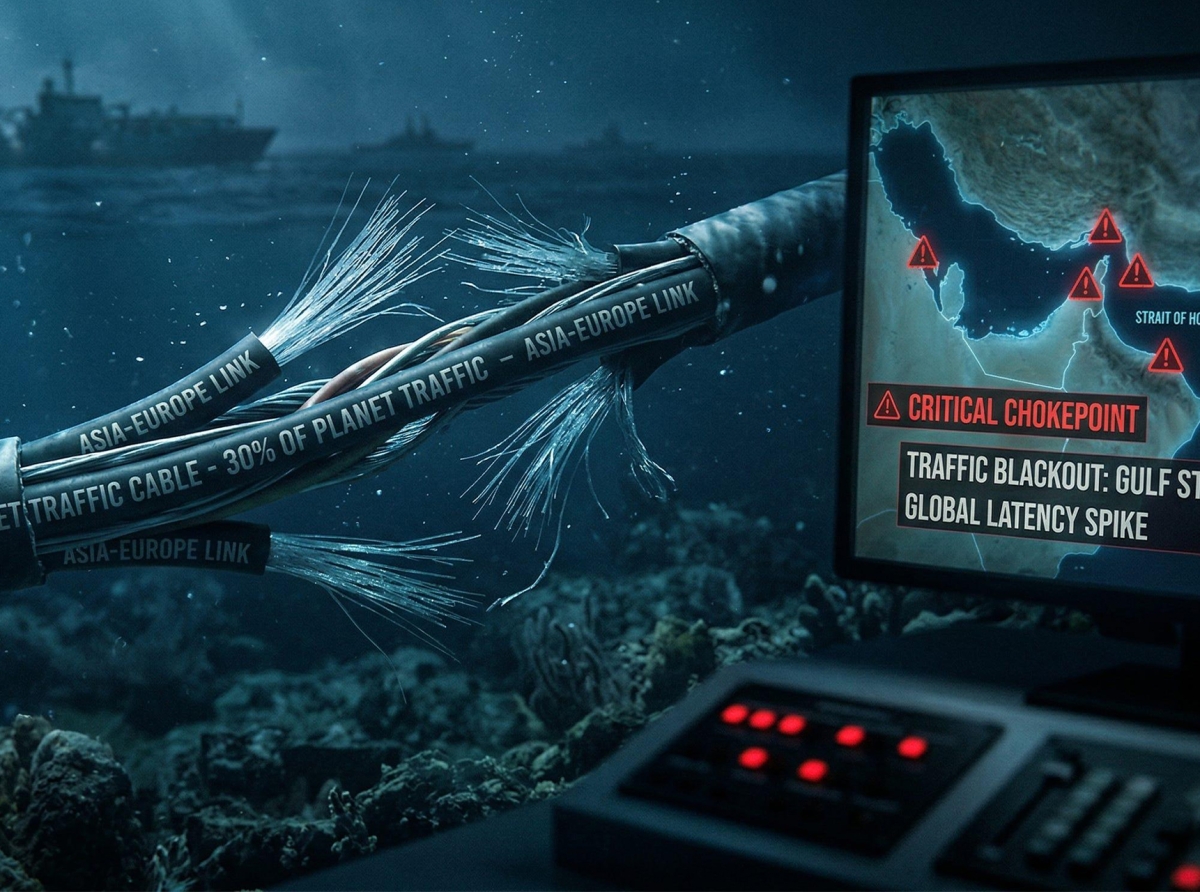
Iran Threatens Subsea Cable Fees – Digital Chokepoint Emerges
Iranian lawmakers have discussed a plan to levy fees on major technology companies for using submarine internet cables that traverse the Strait of Hormuz.
On 9 May 2026, Iranian military spokesman Brigadier General Ebrahim Zolfaghari declared on X: “We will impose fees on internet cables.” State‑linked media have warned that traffic could face disruption if companies refuse to cooperate.
The proposal targets Google, Microsoft, Meta and Amazon, requiring them to comply with Iranian law and pay licensing fees for cable passage, with repair and maintenance rights reserved exclusively for Iranian firms.
According to Alan Mauldin, research director at TeleGeography, only two cable systems – Falcon and Gulf Bridge International – currently pass through Iranian territorial waters out of the several intercontinental cables crossing the strait. Industry data indicate that less than 1% of global international bandwidth traverses the strait, but the impact on regional connectivity could be severe. The development follows Iran’s successful wartime blockade of the strait earlier this year.
On 9 May 2026, Iranian military spokesman Brigadier General Ebrahim Zolfaghari declared on X: “We will impose fees on internet cables.” State‑linked media have warned that traffic could face disruption if companies refuse to cooperate.
The proposal targets Google, Microsoft, Meta and Amazon, requiring them to comply with Iranian law and pay licensing fees for cable passage, with repair and maintenance rights reserved exclusively for Iranian firms.
According to Alan Mauldin, research director at TeleGeography, only two cable systems – Falcon and Gulf Bridge International – currently pass through Iranian territorial waters out of the several intercontinental cables crossing the strait. Industry data indicate that less than 1% of global international bandwidth traverses the strait, but the impact on regional connectivity could be severe. The development follows Iran’s successful wartime blockade of the strait earlier this year.
From Oil Chokepoint to Digital Chokepoint
The Strait of Hormuz has long been known as the world’s most sensitive oil transit corridor, through which roughly one‑fifth of global oil and liquefied natural gas passes. Iran effectively closed it to commercial shipping when the war with the United States began in February 2026, causing energy prices to skyrocket. A ceasefire has been in place since 8 April 2026 but remains fragile, with President Donald Trump describing it this week as having a “one per cent chance” of surviving.Now Tehran is seeking to extend its leverage from hydrocarbons to data. The strait also serves as a critical digital corridor, carrying vast volumes of internet and financial traffic between Europe, Asia and the Persian Gulf. Submarine cables form the backbone of global connectivity, handling the vast majority of the world’s internet and data traffic. A serious disruption would affect far more than internet speeds, threatening banking systems, military communications, artificial intelligence cloud infrastructure, financial trading and cross‑border transactions.
Which Cables Are Vulnerable and Who Would Pay?
Several major intercontinental submarine cable systems cross the Strait of Hormuz, including Falcon, Gulf Bridge International (GBI), Gulf‑TGN, AAE‑1 (Asia‑Africa‑Europe‑1) and SEA‑ME‑WE, which link Gulf states with major data hubs in Europe and Asia. However, due to long‑standing security concerns, international operators have historically routed most cables through a narrow corridor on the Omani side of the waterway. Only two systems – Falcon and GBI – actually pass through Iranian territorial waters.Iran’s Revolutionary Guards‑linked media have proposed that submarine cable operators pay licensing fees for passage, with revenues potentially reaching billions of dollars. Mostafa Taheri, a member of Iran’s parliamentary Industries Commission, put potential transit fee revenues at up to $15 billion. The plan would also require technology giants – Google, Microsoft, Meta and Amazon – to operate under Iranian law, though it remains unclear whether these companies have direct investments in cables traversing Iranian waters.
How Iran would enforce the fees is uncertain. Strict US sanctions currently prohibit American firms from making any payments to Tehran. As a result, the companies themselves may view Iran’s statements as posturing rather than serious policy. Nevertheless, state‑affiliated media have issued veiled threats warning that damage to cables could affect trillions of dollars in global data transmission.
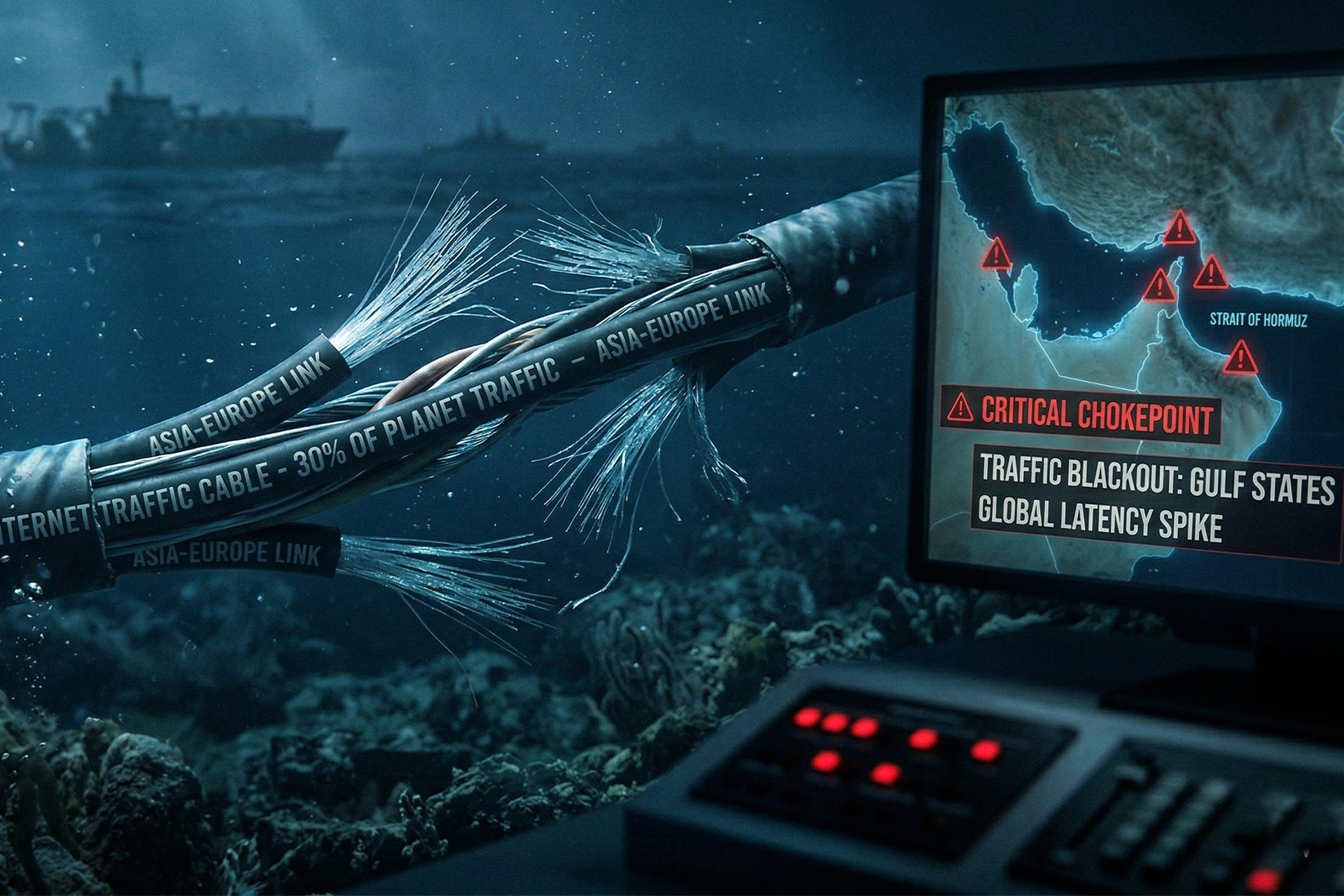
Iran Threatens Subsea Cable Fees – Digital Chokepoint Emerges
How Iran Could Disrupt Undersea Infrastructure
Iran has demonstrated both the capability and the will to interfere with submarine infrastructure. Mostafa Ahmed, a senior researcher at the UAE‑based Habtoor Research Centre, told CNN that the Islamic Revolutionary Guard Corps could use combat divers, small submarines and underwater drones to target cables. The technology required for such operations is within Iran’s existing military arsenal.A recent precedent exists nearby. In 2024, three submarine cables in the Red Sea were severed after a cargo ship sunk by Iran‑backed Houthi militants dragged its anchor across the seabed. According to HGC Global Communications, that incident disrupted approximately 25% of internet traffic in the region. Experts noted at the time that it was likely accidental, but the effect on internet speeds gave renewed focus to how much the world depends on undersea cables.
Even without direct attacks, Iran could disrupt cable maintenance. Submarine cable repair vessels must remain stationary for extended periods when fixing faults. According to maritime insight provider Windward, Alcatel Submarine Networks – one of the world’s largest installers of undersea cables – has paused all regional repair operations following Zolfaghari’s declaration. “With Red Sea cables already degraded, this pause in the Gulf threatens the primary remaining data link between Europe and Asia … any new faults could now become permanent,” Windward said on X.
The strategic shift here is subtle but significant. Iran previously used its ability to close the strait to ships as a threat against global oil supplies. That threat remains, but oil markets have adapted over decades. Digital infrastructure is far more brittle. A single cable cut can disrupt financial trading, cloud services and military communications within minutes. Iran is signalling that it can now hold not just energy markets but the digital economy itself at risk. However, the asymmetry cuts both ways: the US Navy’s Fifth Fleet is headquartered in Bahrain precisely to protect such chokepoints. Any Iranian attack on cables would likely trigger a devastating military response. The real leverage may lie in the threat itself, not its execution.
Regional Impact and Global Bandwidth Reality
The consequences of any disruption would be felt most acutely in the immediate region. Gulf Arab states could face severe internet outages, affecting everything from banking systems to oil export logistics. India could see a large share of its internet traffic affected, potentially disrupting its vast business process outsourcing industry. The strait also serves as a critical digital link between major Asian data hubs such as Singapore and cable landing stations in Europe. Parts of East Africa could face internet blackouts, while financial trading and cross‑border transactions between Europe and Asia could slow considerably.However, the global scale of the threat should not be overstated. According to TeleGeography analysis cited by the International Cable Protection Committee, bandwidth traversing the Strait of Hormuz accounts for less than 1% of international bandwidth globally. John Wrottesley, ICPC operations manager, noted that while regional concerns are valid, submarine cable networks are designed with resilience and redundancy as core operational principles, and the region is also supported by terrestrial connectivity.
Nevertheless, the strait serves as a regional chokepoint. ICPC says five active submarine cable system segments operate in the waterway, with additional systems under development. Any sustained disruption would hurt Gulf economies that have invested heavily in digital transformation and data centre infrastructure.
The Legal Argument and International Precedent
Iranian media have framed the proposal as compliant with international law, citing the 1982 United Nations Convention on the Law of the Sea (UNCLOS). Article 79 of UNCLOS grants coastal states the right to establish conditions for cables or pipelines entering their territory or territorial sea. Iran has signed UNCLOS but never ratified it.Tehran has also cited Egypt as a precedent. Egypt charges transit and licensing fees for submarine cables passing through the Suez Canal, generating significant revenue. However, legal experts draw a critical distinction: the Suez Canal is an artificial waterway built through Egyptian territory, whereas the Strait of Hormuz is a natural international strait governed by different legal principles.
Professor Iirini Papanikolopoulou of SOAS University of London told CNN that for already‑laid cables, Iran must respect existing agreements concluded when those lines were built. For new cables, a coastal state may decide on what terms laying is permitted within its territorial sea. Iranian outlets citing UNCLOS selectively reference Article 79 while ignoring provisions that protect the right to lay and maintain submarine cables. International law specialists argue that any attempt to impose fees or monitor traffic would face immediate international legal and political resistance, as submarine cables are owned by international consortia, not by any single state.
The Broader Strategic Picture
The cable fee proposal has not emerged in a vacuum. Even before the war against the US and Israel began in February 2026, Tehran was restricting its own population’s access to the global internet as part of a crackdown on nationwide protests. NetBlocks reported this week that the internet blackout had entered its 76th day, with government‑backed access schemes producing surveillance, corruption and scams in place of open connectivity. Iran’s Communications Minister acknowledged in April that around 10 million people depended on stable digital access for their livelihoods, and that the shutdown was costing businesses 600 billion tomans (approximately $1.2 billion) per day.The cable fee proposals follow the same pattern of treating digital infrastructure as an instrument of state control. As fears grow that the war could resume following President Trump’s return from China, Tehran is increasingly signalling that it has powerful tools at its disposal beyond conventional military force. The move underscores the significance of the Strait of Hormuz beyond energy exports, as Iran seeks to turn its geographic leverage into long‑term economic and strategic power.
Whether Iran can turn statements about fees into a working mechanism remains unclear. But the discussion of submarine cables shows that the Strait of Hormuz is important not only for oil and gas: under the water lies infrastructure on which banks, cloud platforms and intercontinental communications depend.
Iran’s threat to tax internet cables passing through the Strait of Hormuz represents an expansion of its asymmetric leverage from oil to data. By targeting the physical infrastructure of global connectivity, Tehran aims to impose new costs on Western technology companies and raise the stakes in any future confrontation. Legal obstacles, US sanctions and the limited global bandwidth share through the strait suggest the immediate impact may be small. But the precedent is dangerous: the world’s most sensitive maritime chokepoint has become a digital chokepoint as well. For investors, policymakers and technology executives, the message is clear – protecting undersea cable infrastructure is no longer just a commercial concern but a matter of national and economic security.
Written by Ethan Blake
Independent researcher, fintech consultant, and market analyst.
May 19, 2026
Join us. Our Telegram: @forexturnkey
All to the point, no ads. A channel that doesn't tire you out, but pumps you up.
Independent researcher, fintech consultant, and market analyst.
May 19, 2026
Join us. Our Telegram: @forexturnkey
All to the point, no ads. A channel that doesn't tire you out, but pumps you up.




Report
My comments